Object
The Ma'agan Mikhael ship
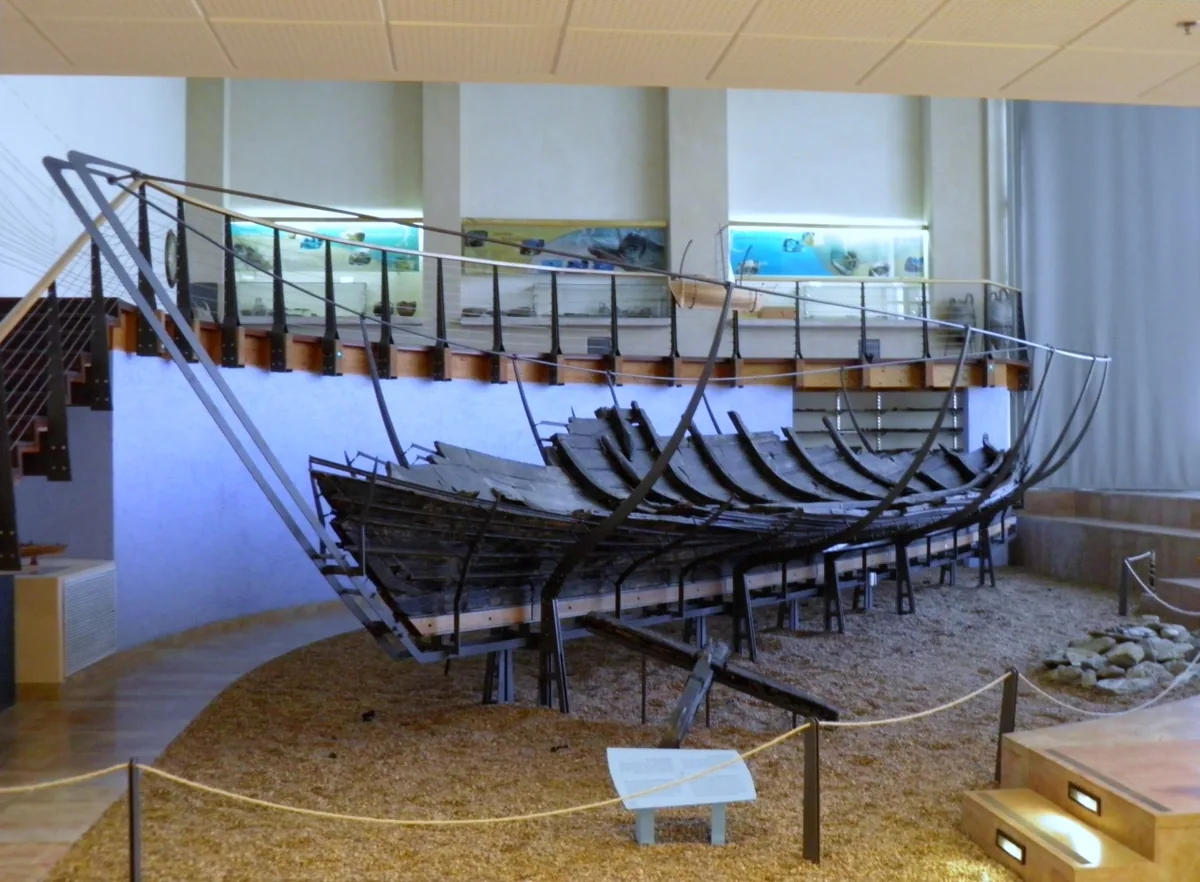
A small merchant ship discovered in 1985 off the Carmel coast, conserved for years and displayed today at the Hecht Museum. The date "about 400 BCE" is the museum's; the placement in the Persian period is ours.
READING OBJECTS
Two wooden hulls from the north of the country, both found by chance, both conserved for years. The records date them in two different ways, and the site reads each as worded.
Objects
Object
A small merchant ship discovered in 1985 off the Carmel coast, conserved for years and displayed today at the Hecht Museum. The date "about 400 BCE" is the museum's; the placement in the Persian period is ours.
Object
A wooden boat exposed in 1986 on the bed of the Sea of Galilee, conserved for 14 years and displayed at the Yigal Allon Centre. The centre dates it "some 2,000 years ago": a wording without a range, so the boat is not placed on the timeline.
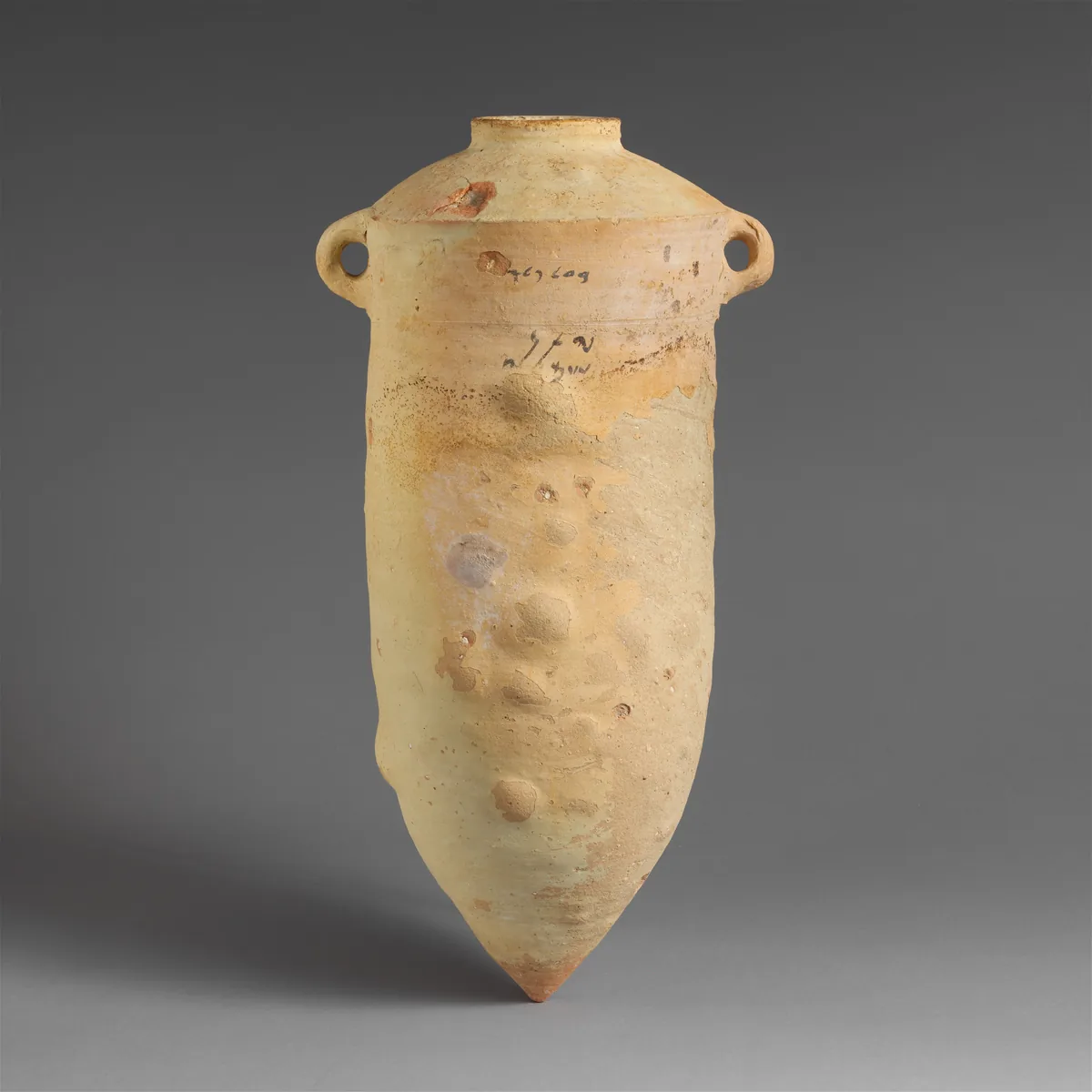
The Ma'agan Mikhael ship was found in August 1985 by a member of the kibbutz, about 70 m from the shore at about 2 m depth; according to the museum's page the keel, sternpost, planks, 14 ribs, the mast base and an intact anchor survived. Source 1. The boat from Ginosar was exposed in January 1986 on the bed of the Sea of Galilee after a drought, by two brothers of the kibbutz; it measures "some 8 meters in length", and its excavation was completed in ten days by archaeologists of the Israel Antiquities Authority with many volunteers. Source 2. Open sea against a lake; two discovery stories the institutions tell themselves.
Both records give a date, but not in the same way. For Ma'agan Mikhael the museum writes that carbon-14 tests and the pottery dated the ship to the late 5th century BCE (about 400 BCE) - a method and a result. Source 1. For the boat from Ginosar the centre writes: "Scientists dated the boat to some 2,000 years ago" - a result without a range and without a method on the page. Source 2. The ship is therefore placed on this site in the Persian period on a cited editorial basis - the museum's date falls within that period - and the page says the placement is ours; the boat is not placed on the timeline and is shown with the centre's wording only. The guide "How are archaeological finds dated?" explains why the wording of a date matters as much as the number.
Wood that has been submerged for centuries disintegrates as it dries, so both hulls went through long conservation before they were displayed: PEG treatment over several years at Ma'agan Mikhael, fourteen years of conservation until 2000 at Ginosar. Sources 1, 2. What a visitor sees is the conserved hull, not the ship as it was at sea. The site adds no claims about construction, cargo or sailing route that the official pages do not state.
The ship is displayed at the Hecht Museum, University of Haifa, whose official page noted, on the day it was read, wings temporarily closed for renovation; the boat is displayed in the visitors' gallery of the Yigal Allon Centre at Ginosar. Visit details were checked on 22.10.2026 against the institutions' pages, and the visit trail "Ancient ships in the north" points to them; opening hours are not copied to this site. Both vessels are shown here in visitors' photographs under open licences from Wikimedia Commons - the ship in Oren Rozen's photograph at the Hecht Museum (CC BY-SA 3.0), the boat in a photograph released as public domain (CC0) - because the institutions publish no licence for their own pictures; the credit and licence appear under each photograph, and the photographs record the conserved hulls as displayed on the day they were taken.
The visit trail connects the two vessels and the Carmel coast in five reasoned steps. The place page "Newe Yam and the Carmel coast" puts Ma'agan Mikhael and Newe Yam on the map. The comparison page sets the two records against each other: wood against wood, carbon-14 and pottery against "some 2,000 years ago".
Source
The research and references behind this page. Rights to external content remain with their owners.
Hecht Museum, University of Haifa · Checked
Yigal Allon Centre · Checked
Continue from here
Every card comes from a documented relation or an editorial link. The reason line explains the connection.
METHOD GUIDE · TIME & CONTEXT
A date connects a question, a sample and a method. A guide to reading ranges, comparisons and the strength of a chronological claim.
Editorial link.
Reading guide
Three words that sound like degrees of the same thing answer three different questions. A guide to reading display status, record numbers and credit lines, with examples read on a known date.
Editorial link.
Adjust the reading experience to suit you. These tools complement your browser and device accessibility settings. Changes apply to this page; they are kept for another visit only if you allowed that in the privacy dialog.
Your choices apply to this page only. Moving to another page restores the defaults.