Object
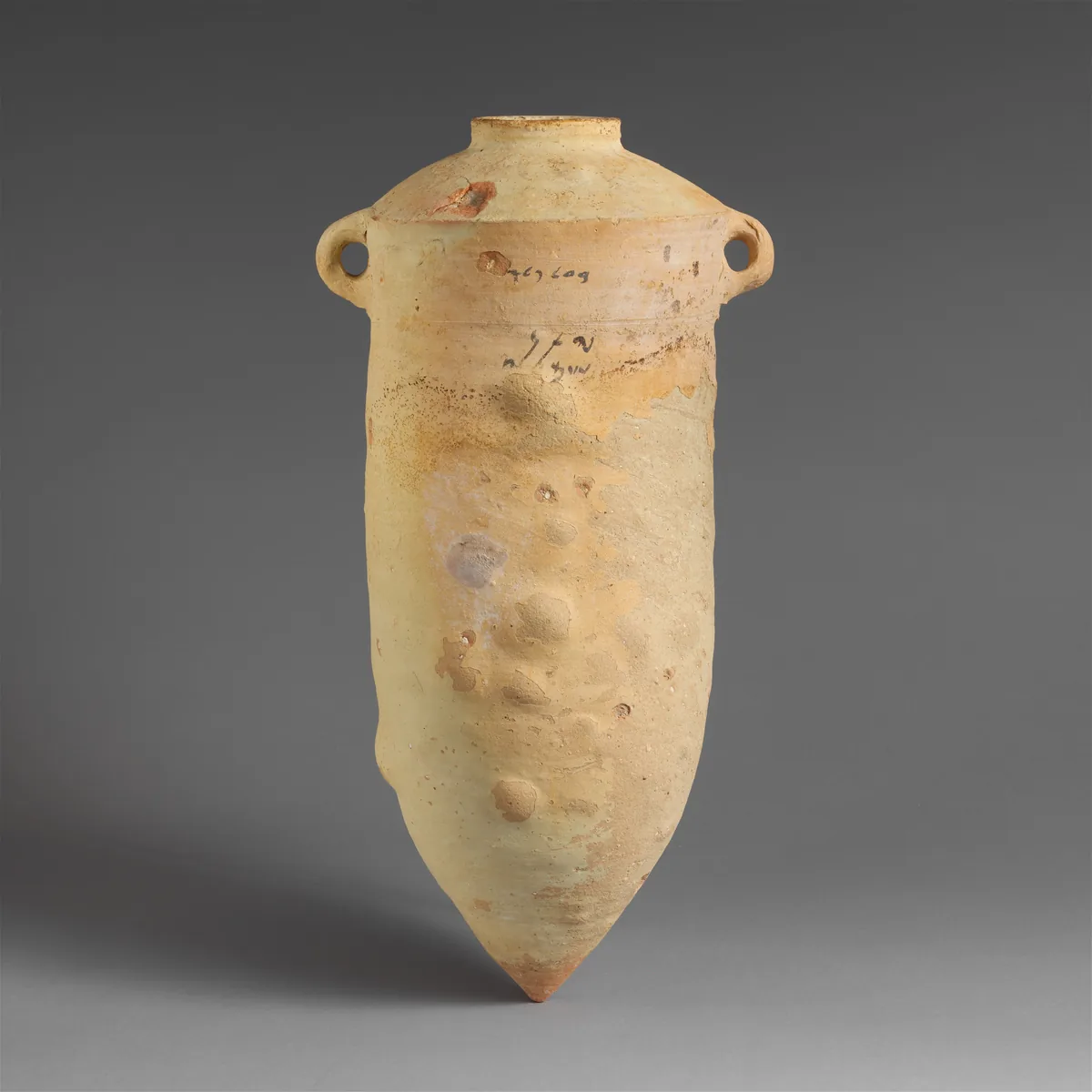
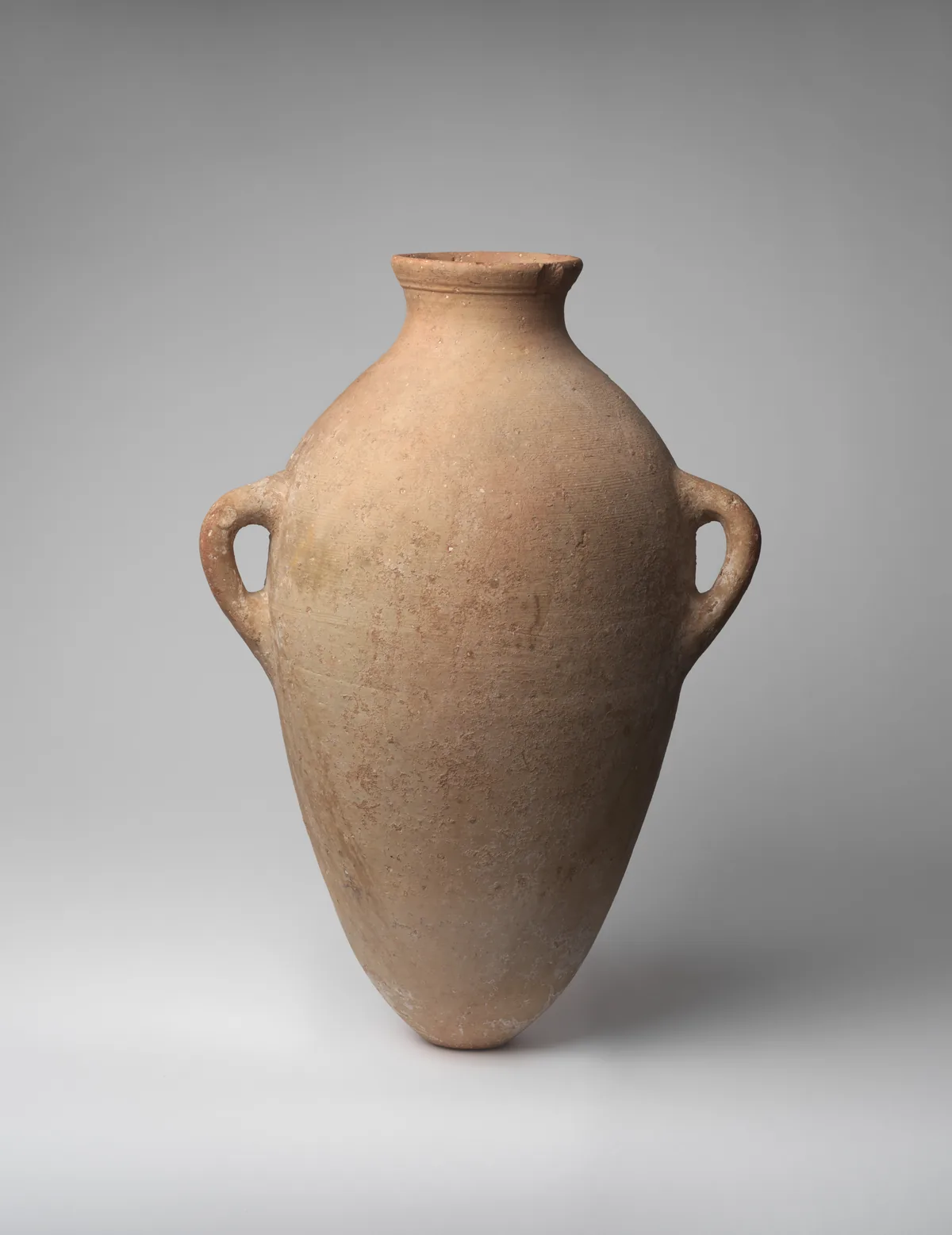
Cypriot amphora with a Phoenician inscription
A Cypriot vessel, a Phoenician inscription and a findspot nobody recorded: one object that teaches us to separate what is written on it from where it came from.
One object, one question
An independent library of archaeological periods, finds, places and research. Explore settlement layers, read objects and discover how evidence supports interpretation.
Held, displayed, on loan: how to read a museum record
188 articles and guides · 38 documented objects
Choose a subject to explore
From the first villages to the Middle Ages.
Neolithic · Bronze Age · RomanDocumented objects from collection records, with a source for every detail.
Amphora · Inscription · Collection recordPottery, inscriptions, coins and weapons.
Pottery · Inscriptions · CoinsJerusalem, Nazareth and the Carmel coast.
Jerusalem · Nazareth · Newe YamLayers of time
Choose a period to see its context and related reading.
Hover or focus a period to preview it; click or press Enter to select. Arrow keys move between periods, Escape closes the preview.Tap a period to open it. Navigation by period, not a timeline drawn to scale. Date boundaries depend on region and the chronology used.
Preview
Preview only - click the band (or here) to open the period
Selected period · Approximately 10,000-5500 BCE
Village life through buildings, tools, seeds and burial: a guide to a long transformation that cannot be reduced to a single date.
Regional frame: eastern Mediterranean and southern Levant
Approximate navigation range; local boundaries and classification systems may differ or overlap.
The photograph could not be loaded
Objects dated to this period
Further reading in this period
Selected period · Approximately 5500-3300 BCE
Copper alongside stone, wall painting alongside tools: reading society through production, use and unequal preservation.
Regional frame: eastern Mediterranean and southern Levant
Approximate navigation range; local boundaries and classification systems may differ or overlap.
The photograph could not be loaded
Further reading in this period
Selected period · Approximately 3300-1200 BCE
Vessels, letters and raw materials reveal different sides of a connected world. Learn why imported finds do not all tell the same story.
Regional frame: eastern Mediterranean and southern Levant
Approximate navigation range; local boundaries and classification systems may differ or overlap.

The photograph could not be loaded
Objects dated to this period
The photograph could not be loaded

The photograph could not be loaded
Further reading in this period
Selected period · Approximately 1200-586 BCE
Homes, craft and prestigious objects: a route through the difference between a period framework and the history of a particular find.
Regional frame: eastern Mediterranean and southern Levant
Approximate navigation range; local boundaries and classification systems may differ or overlap.
The photograph could not be loaded
Objects dated to this period
No photograph of this object here
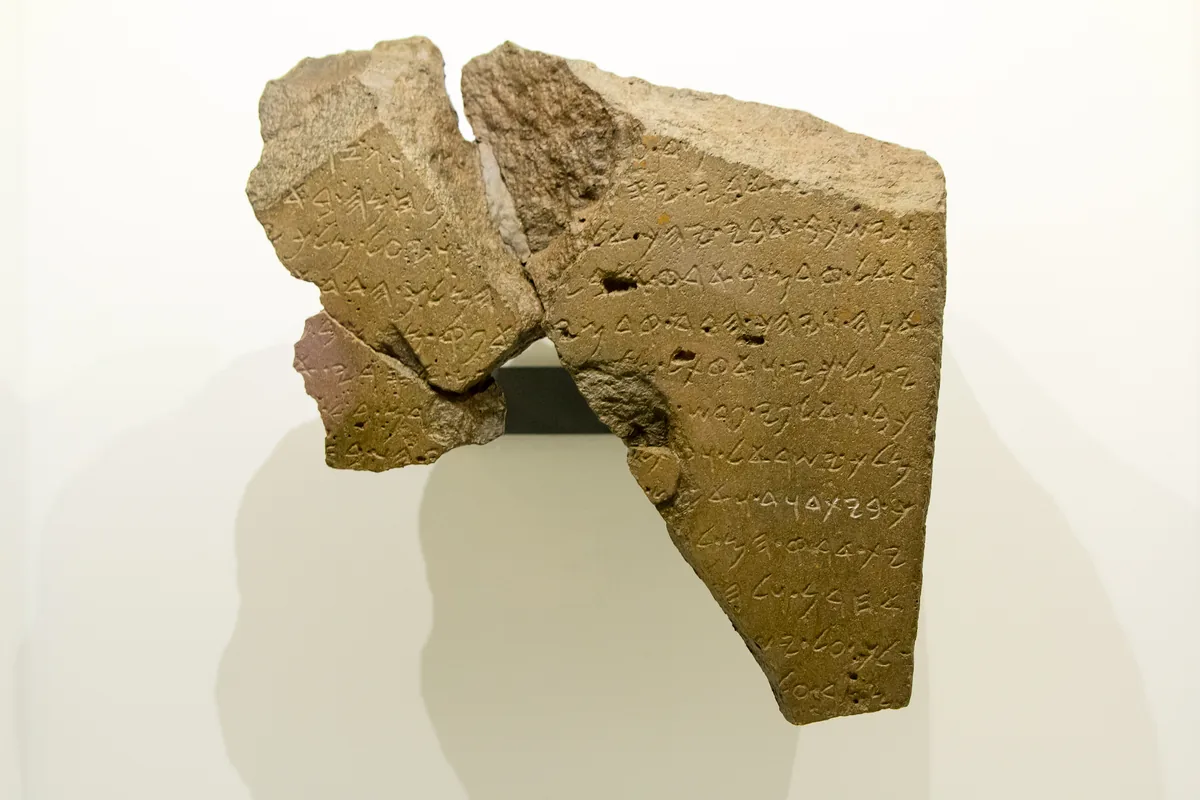
The photograph could not be loaded
Further reading in this period
Selected period · Approximately 586-539 BCE
The frame of 586-539 BCE, from the fall of Jerusalem to the start of Persian rule, is drawn here for Judah and Benjamin only, not for the whole Levant. Two research cases ask what remained in Jerusalem after the destruction and what continued at Mizpah and in Benjamin.
Regional frame: Judah and Benjamin, not the whole Levant; per the Met's timeline
Medium certainty: the start of the frame, 586, is a Judahite date (the fall of Jerusalem), while the Met's timeline dates Babylonian rule in the region as a whole to ca. 606-539 BCE; local phases cross both 586 and 539.
Further reading in this period
Selected period · Approximately 539-331 BCE
Coins, seals and vessels do not independently identify a population. Explore the gap between imperial rule and local archaeological context.
Regional frame: eastern Mediterranean and southern Levant
Approximate navigation range; local boundaries and classification systems may differ or overlap.

The photograph could not be loaded
Objects dated to this period
Further reading in this period
Selected period · Approximately 331-64 BCE
How to compare vessels, writing and buildings without assuming that people’s identities change whenever object styles do.
Regional frame: eastern Mediterranean and southern Levant
Approximate navigation range; local boundaries and classification systems may differ or overlap.
Selected period · Approximately 64 BCE-330 CE
Houses and inscriptions offer starting points for reading everyday life. This route focuses on studies of the Early Roman period.
Regional frame: eastern Mediterranean and southern Levant
Approximate navigation range; local boundaries and classification systems may differ or overlap.
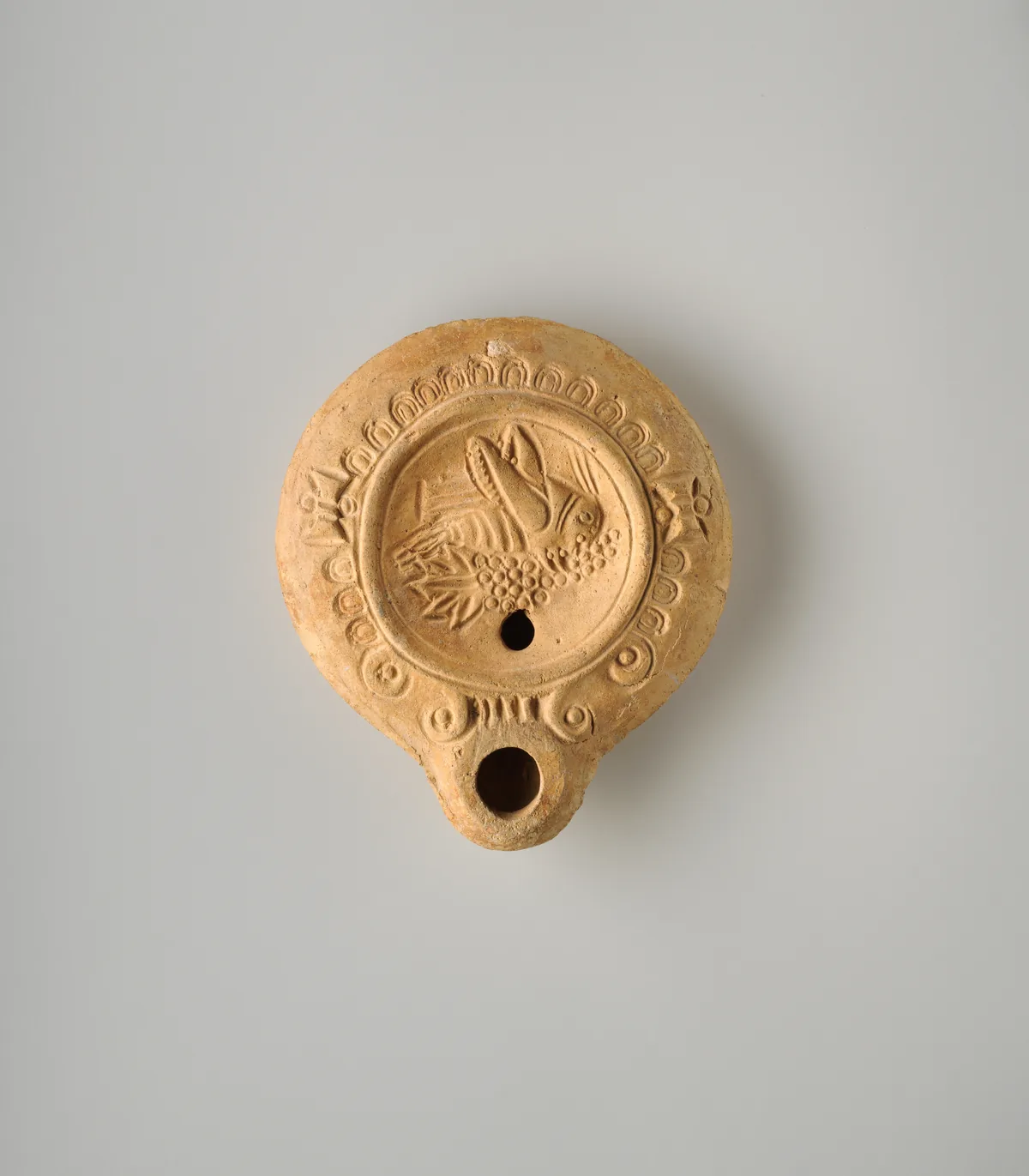
The photograph could not be loaded
Objects dated to this period
Further reading in this period
Selected period · Approximately 330-640 CE
Explore Byzantine chronology through Jerusalem, a glass jug and an anchor from the Carmel coast, while separating finds from the comparisons used to explain them.
Regional frame: eastern Mediterranean and southern Levant
Approximate navigation range; local boundaries and classification systems may differ or overlap.

The photograph could not be loaded
Further reading in this period
Selected period · Approximately 640-1099 CE
Read changes in government through inscriptions, coins and markets without assuming that every home and craft changed at the same moment.
Regional frame: eastern Mediterranean and southern Levant
Approximate navigation range; local boundaries and classification systems may differ or overlap.
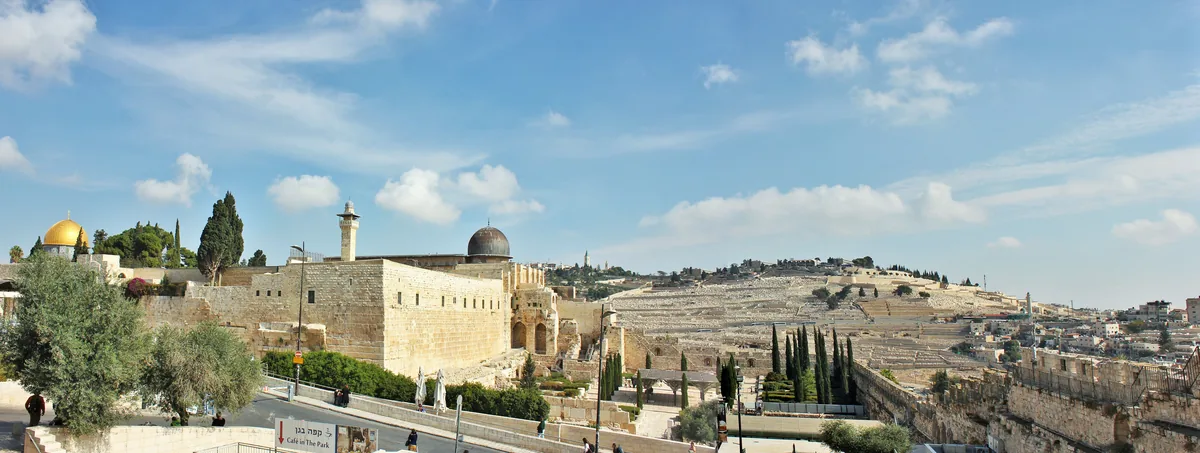
The photograph could not be loaded
Further reading in this period
Selected period · Approximately 1099-1516 CE
Explore medieval Jerusalem and the fountain house at Nazareth through building phases, maintenance and patronage alongside changes of government.
Regional frame: eastern Mediterranean and southern Levant
Approximate navigation range; local boundaries and classification systems may differ or overlap.
Objects dated to this period
Further reading in this period
Objects without a period assignment
The photograph could not be loaded
No photograph of this object here
No photograph of this object here

The photograph could not be loaded
Preview
Preview only - click the band (or here) to open the period
Selected period · 10th millennium to 3900 BCE
A grouping for navigation, not a new historical division: it brings together the Aceramic Neolithic (10th to 6th millennium BCE) and the Ceramic Neolithic (5500-3900 BCE) of the Department of Antiquities' table, whose two phases overlap.
Regional frame: the whole of Cyprus, according to the chronological table of the Department of Antiquities, Cyprus
A navigation group: the two phases overlap at the end of the 6th millennium, and the Met's timeline gives the Neolithic as a whole about 8500-3900 BCE.
Selected period · 3900-2500 BCE
The table of the Department of Antiquities of Cyprus and the Met's timeline date the period to 3900-2500 BCE, but the Paphos museum page places "the end of the Chalcolithic" at the end of the 3rd millennium. On this site: Souskiou and the "Pithos House".
Regional frame: the whole of Cyprus, according to the chronological table of the Department of Antiquities, Cyprus
Medium certainty: the table and the Met agree on 3900-2500 BCE, but the Paphos museum page dates a house of "the end of the Chalcolithic" to "the end of the 3rd millennium", inside the table's Early Bronze Age.
Selected period · 2500-1050 BCE
A grouping for navigation, not a new historical division: the Early, Middle and Late Bronze Age of the Department of Antiquities' table, 2500-1050 BCE, which the Met and the Paphos museum cut at other points.
Regional frame: the whole of Cyprus, according to the chronological table of the Department of Antiquities, Cyprus
A navigation group: the boundaries between the phases differ by up to a century between the table, the Met and the Paphos museum, and one phase at Kition crosses the end of the period.
Selected period · 1050-312 BCE
A grouping for navigation, not a new historical division: the Geometric, Archaic and Classical periods of the Department of Antiquities' table, 1050-312 BCE. It also shows an amphora whose date crosses the boundary between the Archaic and the Classical.
Regional frame: the whole of Cyprus, according to the chronological table of the Department of Antiquities, Cyprus
A navigation group: a catalogue term for a period of the kingdoms does not coincide with the numeric boundaries, and the Idalion data and an amphora of the 6th-5th century cross the 475 BCE boundary.
Selected period · 312-58 BCE
The chronological table of the Department of Antiquities, Cyprus, gives the Hellenistic period the years 312-58 BCE. On this site the period opens with the founding of Nea Paphos and the rock-hewn necropolis to its north, two places whose histories cross the period's limits.
Regional frame: the whole island of Cyprus, following the chronological table of the Department of Antiquities, Cyprus
Medium to high certainty: the founding of Nea Paphos and the use of the Tombs of the Kings cross both limits of the period.
Selected period · 58 BCE-395 CE
The chronological table of the Department of Antiquities, Cyprus, gives the Roman period the years 58 BCE-395 CE. On this site it is represented by the agora of Kourion and the House of Dionysos at Nea Paphos, two buildings dated within the period.
Regional frame: the whole island of Cyprus, following the chronological table of the Department of Antiquities, Cyprus
Medium to high certainty: the Tombs of the Kings, built in the previous period, remain in use until the beginning of the 4th century CE.
Selected period · 395-1191 CE
A navigation group, not a new historical division: it brings together the three rows of the Department of Antiquities, Cyprus table between 395 and 1191 CE, the Early Christian period, the period of the Arab raids and the Byzantine period.
Regional frame: the whole island of Cyprus, following the chronological table of the Department of Antiquities, Cyprus
Certainty varies: medium for the first two rows, whose shared boundary is "the mid-7th century" rather than a year, and high for the Byzantine row of 965-1191.
Selected period · 1191-1571 CE
A navigation group for two rows of the Department of Antiquities, Cyprus table: the Frankish, 1191-1489, and the Venetian, 1489-1571. The end year of the Venetian period differs between the sources.
Regional frame: the whole island of Cyprus, following the chronological table of the Department of Antiquities, Cyprus
High certainty for the Frankish period and medium for the Venetian: for the end of the group the sources give 1571, 1570 and "1576".
Preview
Preview only - click the band (or here) to open the period
Selected period · Approximately 7000-4500 BCE
The Met's timeline dates the Neolithic cultures of Egypt to about 7000-4500 BCE: permanent settlements, domesticated plants and animals, and hunting and fishing alongside them. In the Fayum, according to UCL, the Neolithic culture continues to about 4000 BCE.
Regional frame: the Nile valley, the Delta and the Fayum, per the Met's Heilbrunn Timeline
Low to medium certainty: the range is general for all Neolithic cultures, and the Fayum Neolithic is dated about 5200-4000 BCE, running into the Predynastic period.
Selected period · Approximately 4500-3100 BCE
The Met's timeline divides the period, about 4500-3100 BCE, into four phases, from the Badarian to Naqada III, and knows it mainly from cemeteries. By its end, symbols of a single ruler and the beginnings of writing appear.
Regional frame: the Nile valley in Upper and Middle Egypt, later also the Delta, per the Met's Heilbrunn Timeline
Medium certainty: the sub-phases are dated in rounded ranges, and the start of the period overlaps the Fayum Neolithic, dated to about 4000 BCE.
Selected period · Approximately 3100-2649 BCE
The Met's timeline dates the period to about 3100-2649 BCE but gives it no key-events entry of its own. Radiocarbon dates for the royal tombs at Abydos come out 100-150 years earlier than the historical chronology.
Regional frame: all Egypt, per the Met's Heilbrunn Timeline
Medium certainty: radiocarbon dates from the royal necropolis at Umm el-Qaab come out 100-150 years earlier than the historical chronology, so the start of the period is not fixed to a single year.
Selected period · Approximately 2649-2150 BCE
The Met's timeline dates the Old Kingdom, Dynasties 3-6, to about 2649-2150 BCE and notes that it is best known for the pyramids of Giza and Saqqara. By its end, centralized power had weakened.
Regional frame: all Egypt, per the Met's Heilbrunn Timeline
Medium certainty: the boundaries are the Met's rounded dates, and the source gives no internal dates for the dynasties within the period.
Selected period · Approximately 2150-2030 BCE
According to the Met's timeline, from about 2150 to 2030 BCE Egypt was ruled by two competing dynasties, one at Heracleopolis in the north and one at Thebes in the south. For now the site has one article on the period.
Regional frame: a divided Egypt, Heracleopolis in the north and Thebes in the south, per the Met's Heilbrunn Timeline
Medium certainty: the end of the period runs through the middle of Dynasty 11, and a tomb in the cemetery of Heracleopolis is dated "around 2000", after the boundary of about 2030 BCE.
Selected period · Approximately 2030-1640 BCE
According to the Met's timeline, the Theban king Mentuhotep II reunited Upper and Lower Egypt and ushered in the Middle Kingdom, about 2030-1640 BCE. Three objects from tombs are placed in it on this site.
Regional frame: all Egypt, per the Met's Heilbrunn Timeline
Medium certainty: both of the Met's Egypt timeline pages give the same range, but its start runs through the middle of Dynasty 11, and a tomb at Heracleopolis dated "around 2000" falls in its first decades.
Selected period · Approximately 1640-1550 BCE
According to the Met's timeline, from about 1640 to 1550 BCE northern Egypt was ruled by the Hyksos and the south by a dynasty based at Thebes. The Austrian Archaeological Institute dates the Hyksos capital, Avaris, to about 1530.
Regional frame: a divided Egypt, the Hyksos in the north (Avaris) and a Theban dynasty in the south, per the Met's Heilbrunn Timeline
Medium certainty: the Austrian Archaeological Institute dates Avaris as the Hyksos capital to about 1640-1530 BCE, twenty years beyond the Met's end of the period.
Selected period · Approximately 1550-1070 BCE
The Met's timeline dates the New Kingdom to about 1550-1070 BCE. In Dynasty 18 Memphis is the chief administrative center, while Thebes, home of the dynasty, remains a religious and cultural center.
Regional frame: all of Egypt, per the Met's Heilbrunn Timeline
Both limits are approximate ("ca.") and come from the same timeline; the source describes the passage to the Third Intermediate Period as a gradual decline, not a one-year event.
Selected period · Approximately 1070-712 BCE (timeline) or 1070-664 BCE (essay)
The Met's timeline ends this period in 712 BCE; an essay by the same museum ends it in 664. The Nubian Dynasty 25 runs across both dates, and on this site the boundary stays visible.
Regional frame: a divided Egypt, Tanis in the eastern Delta and Thebes, per the Met's Heilbrunn Timeline and the museum's essay
The start is approximate; the end is disputed within the museum itself (712 or 664 BCE), and Dynasty 25 (ca. 743-664) crosses the 712 line.
Selected period · Approximately 712-332 BCE (timeline) or 664-332 BCE (essay)
The Met's timeline starts the period in 712 BCE and counts Dynasties 25 to 30 in it; the museum's essay starts it in 664. Both versions end in 332 BCE, with the conquest of Alexander the Great.
Regional frame: all of Egypt, per the Met's Heilbrunn Timeline and the museum's essay
The end in 332 BCE is shared by both sources; the start is disputed within the museum (712 or 664), and Dynasty 25 crosses the line.
Selected period · Approximately 332-30 BCE
In 332 BCE Alexander the Great conquered Egypt and built Alexandria, "turned outward" toward the Mediterranean; in 30 BCE Octavian assumed control. The Met's timeline joins these years into one period with two names.
Regional frame: all of Egypt, per the Met's Heilbrunn Timeline
Both limits are tied to dated events (332 and 30 BCE), but the passage to Ptolemaic rule was, per the source, "informally and then formally", with no year given for the formal step.
Selected period · Approximately 30 BCE-330 CE
The Met's timeline dates Roman rule in Egypt to about 30 BCE-330 CE. The emperors represent themselves as successors to the pharaohs, and in the second century Greek is the language of administration.
Regional frame: all of Egypt, per the Met's Heilbrunn Timeline
The limits are approximate ("ca."); changes in religion, language and burial do not stop at them, and the source itself dates the closing of the temples to 392 CE, already in the Byzantine period.
Selected period · Approximately 330-616 CE; 629-641 CE
The Met's timeline shows Byzantine rule in Egypt in two spans, ca. 330-616 and 629-641, with a short Sasanian rule between them. On this page: Abu Mena and the monastery at Mount Sinai.
Regional frame: all of Egypt, following the Met's Heilbrunn Timeline
Medium certainty: only the start (330) is marked as approximate in the source, the span is interrupted by Sasanian rule in 616-628, and the Arab conquest (639-642) overlaps its end.
Selected period · 641-969 CE
The Met's timeline divides the years 641-969 in Egypt into six spans, from the Rightly Guided Caliphs to the Ikhshidid dynasty. Three articles on this site: al-Fustat, the mosque of Ibn Tulun and Abu Mena.
Regional frame: all of Egypt, following the Met's Heilbrunn Timeline
Medium certainty: the start follows the timeline bar (641), but the conquest itself is dated 639-642 and crosses the boundary.
Selected period · 969-1171 CE
According to the Met's timeline, the Fatimid caliphate ruled Egypt from 969 to 1171 and founded Cairo as its capital. Three articles on this site: the founding of Cairo and al-Azhar, the mosque of al-Hakim, and the city gates of 1087 and 1092.
Regional frame: all of Egypt, following the Met's Heilbrunn Timeline
High certainty: both Met timeline pages and UNESCO's Cairo page give the same span, 969-1171; the events at either end extend over several years.
Selected period · 1171-1250/1252 CE
According to the Met's timeline, the Ayyubid dynasty ruled Egypt from 1171; its bar ends in 1252, while the Mamluk bar begins in 1250. Two articles on this site: the Citadel of Cairo, and the madrasa and mausoleum of Salih Najm al-Din Ayyub.
Regional frame: all of Egypt, following the Met's Heilbrunn Timeline
Medium certainty: the end is double, 1250 or 1252, and the sources disagree on the date for the beginning of the Citadel of Cairo (1187 or 1176).
Selected period · 1250-1517 CE
According to the Met's timeline, the Mamluk sultanate ruled Egypt in 1250-1517, and its patronage focused on public and pious foundations. On this site: the complexes of Qalawun and Sultan Hasan in Cairo, and Qaitbay's funerary complex in the Northern Cemetery.
Regional frame: all of Egypt, following the Met's Heilbrunn Timeline
High certainty: both Met pages and UNESCO's page give 1250-1517; the start overlaps the end of the Ayyubid period (1250-1252), and the end, 1517, differs from the 1516 boundary of the site's Levant page.
Preview
Preview only - click the band (or here) to open the period
Selected period · Approximately 10,000-5500 BCE
The Met's timeline divides the Mesopotamian Neolithic into a Pre-Pottery phase, about 10,000-7000 BCE, and a Pottery phase, about 7000-5500 BCE. It dates the pottery styles of the north, Hassuna, Samarra and Halaf, in overlapping ranges.
Regional frame: Mesopotamia, mainly the north, per the Met's Heilbrunn Timeline of Art History
The range is approximate ("ca." in the source); the northern periods overlap, and in the same source the southern Ubaid already begins about 6200 BCE, before the end of the period as framed here.
Selected period · Approximately 5500-3000 BCE
In the Met's timeline the Chalcolithic in Mesopotamia runs about 5500-3000 BCE and contains the Ubaid and Uruk periods. In the south, according to the same source, the Ubaid begins some 700 years earlier than in the north.
Regional frame: northern and southern Mesopotamia, each with its own sequence, per the Met's Heilbrunn Timeline of Art History
The range is approximate; the southern Ubaid begins about 6200 BCE, within the preceding period on this site, and the southern Jemdet Nasr period, about 3100-2900 BCE, crosses the end of this one.
Selected period · Approximately 3000-2000 BCE
In the Met's timeline the Early Bronze Age in Mesopotamia runs about 3000-2000 BCE. In the south the timeline lists the Early Dynastic period, the Akkadian dynasty and the Third Dynasty of Ur; in the north, the Ninevite V period and Akkad.
Regional frame: northern Mesopotamia (Ninevite V) and southern Mesopotamia (Early Dynastic, Akkad, Ur III), per the Met's Heilbrunn Timeline of Art History
The range is approximate; the southern Jemdet Nasr period crosses its start, and in the north the list leaves a gap between the end of Ninevite V and Akkad.
Selected period · Approximately 2000-1600 BCE
In the Met's timeline the Middle Bronze Age in Mesopotamia runs about 2000-1600 BCE. In the north it is the Old Assyrian period, in the south the Old Babylonian, both with exactly the same bounds.
Regional frame: northern Mesopotamia (Old Assyrian period) and southern Mesopotamia (Old Babylonian period), per the Met's Heilbrunn Timeline of Art History
The range is approximate; the source gives north and south identical round bounds, and the dated events within it fall into two sub-ranges.
Selected period · Approximately 1600-1200 BCE
In the Met's timeline the Late Bronze Age in Mesopotamia runs about 1600-1200 BCE. In the north come Mitanni and then the Middle Assyrian period, in the south the Kassite dynasty and the Middle Babylonian period; three of them continue after 1200.
Regional frame: northern Mesopotamia (Mitanni, Middle Assyrian period) and southern Mesopotamia (Kassite dynasty, Middle Babylonian period), per the Met's Heilbrunn Timeline of Art History
The range is approximate; the Kassite dynasty (about 1574-1157 BCE), the Middle Babylonian period (about 1400-1100) and the Middle Assyrian period (about 1350-1100) cross the end of this period, so items of their time may belong on the next page.
Selected period · Approximately 1200-911 BCE
The Met's timeline marks the start of the Iron Age "from ca. 1200 B.C." without a regional name. This page bridges the years between the end of the Late Bronze Age, about 1200 BCE, and the start of the Neo-Assyrian empire, about 911 BCE.
Regional frame: northern and southern Mesopotamia; a bridging row between two pages of the Met's Heilbrunn Timeline of Art History
Low certainty: the source gives this span no regional name; its start ("from ca. 1200") and its end (about 911) come from two different pages, and the Kassite, Middle Babylonian and Middle Assyrian periods continue into it.
Selected period · Approximately 911-612 BCE
The Met's timeline dates the Neo-Assyrian empire about 911-612 BCE. Beside it, the timeline lists a separate Babylonian sequence, which the site does not copy onto this page.
Regional frame: mainly northern Mesopotamia, per the Met's Heilbrunn Timeline of Art History
High certainty for the frame itself; the Babylonian sequence beside it, from about 1000 BCE, and Assyrian rule within it, about 750-625 BCE, overlap it, and the Neo-Babylonian kingdom begins about 625 BCE, before 612.
Selected period · 626/612-539 BCE
The Met's timeline separates a Neo-Babylonian kingdom, ca. 625-612 BCE, from the Neo-Babylonian empire, 612-539 BCE, and UNESCO counts Babylon as capital from 626. The start is therefore double, 626/612, and it overlaps the end of Assyria.
Regional frame: southern Mesopotamia, later the whole region, per the Met's Heilbrunn Timeline and UNESCO
High certainty: both sources end the period in 539; the start depends on the definition (626 for Babylon as capital, ca. 625 for the kingdom, 612 for the empire) and overlaps the end of the Neo-Assyrian period.
Selected period · Approximately 539-331 BCE
The Met's timeline dates Persian rule in Mesopotamia ca. 539-331 BCE, from its incorporation into the empire of Cyrus the Great to the defeat of the Persians by the armies of Alexander. Two documents on this site, from Babylon and from Nippur, belong to the period.
Regional frame: the whole of Mesopotamia, per the Met's Heilbrunn Timeline
High certainty for the frame; different sources place the start in 539, ca. 550 or 547 BCE depending on the question they answer, and the end in 331 is the defeat of the Persians by Alexander.
Selected period · Approximately 331-138 BCE
The Met's timeline dates Hellenistic rule by the Macedonian and Seleucid dynasties ca. 331-138 BCE. The site has a single item for the period, Seleucia on the Tigris, and a documented gap in place of a second.
Regional frame: the whole of Mesopotamia, per the Met's Heilbrunn Timeline
Medium certainty: the end depends on the year of the Parthian conquest, which the sources place in 141, ca. 139 or ca. 138 BCE, and the source does not date the transition from Macedonian to Seleucid rule.
Selected period · Approximately 138 BCE-224 CE
The Met's timeline dates Parthian rule of the Arsacid dynasty in Mesopotamia ca. 138 BCE-224 CE, long after the Parthian period begins in Iran. Three sites document it on this site: Seleucia, Hatra and Ashur.
Regional frame: Iraq and northeastern Syria, per the Met's Heilbrunn Timeline
Medium certainty: the start (ca. 138 BCE) differs in other sources (139 and 141 BCE) and in Iran (247 BCE); the end in 224 CE, with the founding of the Sasanian dynasty, is shared by the sources.
Selected period · 224-636/37 CE
The Met's timeline dates Sasanian rule in Mesopotamia 224-636/37 CE, from Ardashir I's founding of the dynasty to the coming of Islam; in Iran the period runs on this site until 651. Both items of the period come from Ctesiphon.
Regional frame: Iraq and northeastern Syria, per the Met's Heilbrunn Timeline
High certainty: the sources start the period in 224; the end is written 636/37, so the source does not choose between two years, and on this site the Sasanian period in Iran ends in 651.
Selected period · 636/37-1258 CE
The Met's timeline lists for Iraq the Rightly Guided Caliphs from ca. 636/37, the Umayyads and the Abbasid caliphate, 750-1258, within which the Buyids and the Seljuqs held effective power. Two articles show the period: Samarra and the Mustansiriyya Madrasa.
Regional frame: the whole of Mesopotamia, with the Jazira separately, per the Met's Heilbrunn Timeline
Medium certainty: the start depends on the date of the Arab conquest (636/37 in the chronology list, 634-644 in the key events), and within the Abbasid period effective power passed to the Buyids and the Seljuqs, and in the north to the Zengids.
Selected period · 1258-1508 CE
The Met's timeline divides 1258-1508 in Iraq among four dynasties: the Ilkhanids, the Jalayirids, the Qara Quyunlu and the Aq Quyunlu. The page begins with the Mongol sack of Baghdad and ends with the start of Safavid rule in 1508.
Regional frame: the whole of Mesopotamia (Iraq), per the Met's Heilbrunn Timeline
Medium certainty: the boundaries are dates of rule from the chronology lists, and the same timeline also gives some dynasties other dates (the Ilkhanids in Iran 1256-1353, the Qara Quyunlu 1351-1469, the Aq Quyunlu 1378-1508).
Preview
Preview only - click the band (or here) to open the period
Selected period · Approximately 8000-5000 BCE
The Met's timeline dates the Neolithic in Iran about 8000-5000 BCE and opens it with the domestication of sheep and goats at Ali Kosh. The site's Iranian frame therefore starts some 2,000 years after its Levant and Mesopotamia frames, whose boundaries are not copied here.
Regional frame: western and southwestern Iran, after the Met's timeline
Approximate dates from a single curatorial timeline; its boundary between the Pre-Pottery and Pottery Neolithic (about 7500 BCE) is not sharp, since the same source places the early clay vessels of Ganj Dareh in "ca. 8th millennium B.C." without saying on which side of it they fall.
Selected period · Approximately 5000-3500 BCE
The Met's timeline dates the Chalcolithic in Iran about 5000-3500 BCE. This page holds two cases: Susa, founded at the end of the fifth millennium BCE, and Tall-e Bakun A in Fars, to which its source gives no date of its own.
Regional frame: Iran, mainly Khuzestan and Fars, after the Met's timeline
Approximate dates; the sources date the founding of Susa to about 4200 BCE, "by the end of the fifth millennium" and "the late 5th millennium BCE", and the source on Tall-e Bakun A gives it no date of its own.
Selected period · Approximately 3500-2000 BCE
The Met's timeline dates the Early Bronze Age in Iran about 3500-2000 BCE and places overlapping phases within it: Susa II to IV, the Proto-Elamite period and the start of the Old Elamite period, which runs on past the 2000 BCE boundary.
Regional frame: southwestern and eastern Iran, after the Met's timeline
Approximate dates; the phase names overlap (Susa III with the Proto-Elamite period, Susa IV with the Old Elamite period), and the Old Elamite period continues onto the next page.
Selected period · Approximately 2000-1500 BCE
The Met's timeline dates the Middle Bronze Age in Iran about 2000-1500 BCE. The Old Elamite period began earlier, and the sources disagree on when it ended: about 1500 BCE at the Met, about 1600 BCE in the Encyclopaedia Iranica.
Regional frame: southwestern Iran and the Zagros, after the Met's timeline
Approximate dates; the end of the Old Elamite and Sukkalmah period is about 1500 BCE at the Met and about 1600 BCE in Iranica, and the period itself began on the previous page.
Selected period · Approximately 1500-539 BCE
A navigation group for Elam in southwestern Iran, about 1500-539 BCE on the Met's timeline, in two periods. It runs in parallel with the Iron Age track of the north and west: the two are contemporary, not consecutive.
Regional frame: southwestern Iran (Elam), after the Met's timeline
Both boundaries differ between the sources, about 1600 or 1500 BCE at the start and about 539 or 520 BCE at the end, and the whole track runs at the same time as the Iron Age track of northern and western Iran.
Selected period · Approximately 1450-550 BCE
A navigation group for Iron Age I, II and III in northern and western Iran, about 1450-550 BCE on the Met's timeline. It runs in parallel with the Elam track of the southwest, and its name marks a cultural change: iron objects appear in Iran only in the 9th century BCE.
Regional frame: northern and western Iran, after the Met's timeline
Iranica gives no fixed range for Iron Age I and ends Iron Age III about 600 BCE rather than 550, the same label can denote different centuries in Luristan and around Urmia, and the whole track runs at the same time as the Elam track of the southwest.
Selected period · Approximately 559-330 BCE
The Met's timeline dates Achaemenid Iran to about 559-330 BCE, from Cyrus II to the defeat of the Persians by the armies of Alexander of Macedon. Its beginning overlaps the end of the two parallel tracks before it.
Regional frame: all of Iran, per the Met's Heilbrunn Timeline
High certainty for the range itself; its start overlaps the end of the Neo-Elamite period and of Iron Age III, and the transition to the Seleucid period runs through Alexander's conquest.
Selected period · 323-247 BCE
The Met's timeline dates the Seleucid period in Iran 323-247 BCE. But 247 is the founding year of the Parthian dynasty, not the end of Seleucid rule everywhere in Iran: in the west a temple was built under Antiochus III, after it.
Regional frame: mainly western Iran, per the Met's Heilbrunn Timeline
Low certainty: the row ends in 247 with the founding of the Parthian dynasty in the north, and Seleucid rule in the west continued after it, so the row overlaps the Parthian period in practice.
Selected period · 247 BCE-224 CE
The Met's timeline dates the Parthian period 247 BCE-224 CE, from the founding of the dynasty in northern Iran until Ardashir I ended Parthian rule. On this site it has two items: a bronze statue and the reliefs of Bisotun.
Regional frame: all of Iran, per the Met's Heilbrunn Timeline
Medium certainty: at the start of the row Seleucid rule still continues in western Iran, and Iranica dates the period ca. 250 BCE-226 CE.
Selected period · 224-651 CE
The Met's timeline dates the Sasanian empire 224-651 CE, from Ardashir I to the death of Yazdgard III. UNESCO also gives it 658, and its end overlaps the beginning of caliphal rule.
Regional frame: all of Iran, per the Met's Heilbrunn Timeline
High certainty; a minor conflict at the end: UNESCO also gives the empire 224-658 for Fars, and the Rightly Guided Caliphs begin in 642, before 651.
Selected period · 651-1040 CE
The row runs from 651, the death of the last Sasanian ruler, to about 1040, the beginning of the Seljuq sultanate. Within it caliphs and Iranian dynasties overlap, and Khorasan stands apart from the rest of Iran.
Regional frame: all of Iran, with Khorasan separately, per the Met's Heilbrunn Timeline
Medium certainty: the Rightly Guided Caliphs (642-661) overlap the end of the Sasanian row, the Iranian dynasties overlap one another, and Buyid rule (945-1055) continues after 1040.
Selected period · Approximately 1040-1221 CE
The Met's timeline gives the Seljuq sultanate ca. 1040-1157 and the Khwarazmshah dynasty in the northeast to 1221, when the Mongols took control of Iran. The two items on this site are additions to a mosque at Isfahan and funerary monuments at Kharraqan.
Regional frame: all of Iran, and the northeast for the Khwarazmshahs, per the Met's Heilbrunn Timeline
Medium certainty: the start is approximate (ca. 1040), Buyid rule continues to 1055, and the Seljuq sultanate is listed only to 1157, followed by the Khwarazmshahs in the northeast.
Selected period · 1221-1353 CE
The Met's timeline lists Mongol rule from 1221 to 1256 and the Ilkhanid dynasty from 1256 to 1353. A new dynasty already rises in the south before the row ends, so it overlaps the row that follows.
Regional frame: all of Iran, per the Met's Heilbrunn Timeline
High certainty for the dates; the end of the row overlaps the Muzaffarid dynasty (from ca. 1340) of the next row.
Selected period · Approximately 1340-1501/1508 CE
Iran's last row on this site gathers dynasties that the Met's timeline lists side by side, not one after another: Muzaffarids, Jalayirids, Timurids, Qara Quyunlu and Aq Quyunlu. It ends in 1501/1508 with the beginning of the Safavids, and has no 1516 boundary.
Regional frame: the south, the northwest and all of Iran, per the Met's Heilbrunn Timeline
Medium certainty: the dynasties overlap one another and the end of the Ilkhanid row, and the Met's two pages disagree on the end of the Timurids (1501 or 1508).
Preview
Preview only - click the band (or here) to open the period
Selected period · Approximately 7000-3200 BCE
The Met's timeline dates the Neolithic cultures of Greece ca. 7000-3200 B.C. The two sites on this page, Sesklo and Dimini in Thessaly, give the period its dated examples, and the sources disagree on when, and why, Dimini was enclosed by walls.
Regional frame: mainland Greece and Crete, per the Met's Heilbrunn Timeline
Medium certainty: ca. 7000-3200 B.C. is the Met's rounded range; for Dimini the sources give the end of the fifth millennium BC for the earliest settlement and ca. 3400 B.C. for fortifications.
Selected period · Approximately 3200-1050 BCE
A display group for navigation, not a new historical division: the Met's timeline divides the Aegean Bronze Age into Early (ca. 3200-2000 B.C.), Middle (ca. 2000-1600 B.C.) and Late (ca. 1600-1050 B.C.); the mainland, the Cyclades and Crete keep their own phase names.
Regional frame: mainland Greece, the Cyclades and Crete, per the Met's timeline, with the Dartmouth and Warsaw chronologies for the subregions
Medium certainty: the group's limits are the Met's rounded dates; the subregional sequences begin and end their phases at different dates, and absolute Aegean Bronze Age dates are, in Dartmouth's words, "not yet very reliable".
Selected period · Approximately 1050-700 BCE
A display group for navigation that joins two rows of the Met's timeline: the Iron Age (ca. 1050-900 B.C.), Protogeometric in the Warsaw table, and the Geometric period (ca. 900-700 B.C.). It is not a historical division of its own.
Regional frame: mainland Greece and the Aegean islands, per the Met's timeline
Medium certainty: both rows use the Met's rounded dates; one source draws the line between Protogeometric and Geometric at 1000 BC instead of 900.
Selected period · Approximately 700-480 BCE
The Met's timeline for ancient Greece dates the Archaic period about 700-480 BCE. On this site it holds a marble kouros carved in Attica about 590-580 BCE and the red-figure technique, which the same timeline places in Athens about 525 BCE.
Regional frame: mainland Greece and the Aegean islands, after the Met's timeline for ancient Greece
Both boundaries are approximate ("ca."); the Geometric period precedes it and the Classical follows, with no overlap in the source.
Selected period · Approximately 480-323 BCE
The Met's timeline dates the Classical period in Greece about 480-323 BCE. Two shorter bars inside it mark Athens under Perikles and the rise of Macedonia; the pages placed here include the Parthenon and Aigai (Vergina).
Regional frame: mainland Greece and the Aegean islands, after the Met's timeline for ancient Greece
Both boundaries are approximate; the Corinthian League, which the source dates from 338 BCE, is dissolved in 322 BCE, one year after the period's end.
Selected period · Approximately 323-31 BCE
The Met's timeline dates the Hellenistic period about 323-31 BCE. From 146 BCE the same timeline also counts Roman rule on the Greek mainland, so the last 115 years of the period also belong to the period of Roman rule.
Regional frame: mainland Greece and the Aegean islands, after the Met's timeline for ancient Greece
Approximate boundaries; from 146 BCE to its end the period overlaps Roman rule in Greece, and in those years neither period replaces the other.
Selected period · 146 BCE-330 CE
The Met's timeline labels this period "Roman rule, Greek mainland, 146 B.C.-330 A.D.": a period defined by who ruled rather than by a phase of culture, which begins while the Hellenistic period is still running.
Regional frame: mainland Greece, after the Met's timelines for ancient Greece
The source does not mark these dates as approximate; the period overlaps the Hellenistic until about 31 BCE and covers the Greek mainland only.
Selected period · 330-1204 CE
The site's Byzantine period runs from 330, where the Met's timeline begins the Byzantine era in Greece, to 1204, when the capital fell to the knights of the Fourth Crusade. The same timeline's Byzantine empire continues to 1453.
Regional frame: Greece and the Aegean, excluding Constantinople, after the Met's timelines for Greece and the Balkan Peninsula
Medium certainty: the start follows the source, but the end at 1204 is the site's division of a Byzantine empire that the source runs to 1453.
Selected period · 1204-1453 CE
From 1204, when the armies of the Fourth Crusade conquered Byzantium, Latin principalities and Byzantine states held parts of Greece side by side. The period ends in 1453, but Mystras was captured only in 1460, and the Knights of St John held Rhodes until 1522 or 1523.
Regional frame: Greece and the Aegean, after the Met's timeline for the Balkan Peninsula and UNESCO's pages on Mystras and Rhodes
Medium certainty: 1453 is a date of Constantinople, not of every place in the Aegean; at Mystras (1460) and in Rhodes (1522 or 1523) the period continues beyond it.
Preview
Preview only - click the band (or here) to open the period
Selected period · Approximately 11,000-6400 BCE
A navigation group that brings together the Pre-Pottery Neolithic (about 11,000-6900 BCE) and the Pottery Neolithic (about 6900-6400 BCE) of the Met's timeline. It is not a new historical division.
Regional frame: Anatolia, following the Met's Heilbrunn Timeline
The group is a navigation aid whose limits are those of its two rows; the range UNESCO gives for Çatalhöyük also crosses its upper limit, 6400 BCE.
Selected period · Approximately 6400-3800 BCE
The Met's timeline dates the Chalcolithic in Anatolia to about 6400-3800 BCE and describes it as a continuity of Neolithic traditions with an increase in the use of copper. The site currently holds a single item in it, the West Mound of Çatalhöyük.
Regional frame: all of Anatolia, with the Halaf and Ubaid cultures in the east, following the Met's Heilbrunn Timeline
Medium certainty: a range of more than 2,500 years within which the source gives the eastern cultures ranges of their own, and both of whose limits are crossed by the dates of sites and cultures.
Selected period · Approximately 3800-3000 BCE
The Met's timeline has no period name for the years between about 3800 and 3000 BCE. The site presents them as the "Late Chalcolithic", the label UNESCO uses for Arslantepe, whose palace complex is dated 3400-3100 BCE.
Regional frame: eastern Anatolia (Arslantepe), with UNESCO's label and limits set between the rows of the Met's Heilbrunn Timeline
Low certainty: the row has no period on the Met's timeline, and UNESCO itself uses "Late Chalcolithic" for different ranges.
Selected period · Approximately 3000-1200 BCE
A navigation group that brings together the Early (about 3000-2000 BCE), Middle (about 2000-1600 BCE) and Late (about 1600-1200 BCE) Bronze Age of the Met's timeline. It is not a new historical division.
Regional frame: Anatolia, following the Met's Heilbrunn Timeline
The group is a navigation aid; its internal limits are crossed at Troy (to about 1900 BCE) and by the Hittite Old Kingdom (from about 1680 BCE).
Selected period · Approximately 1200-550 BCE
From the destruction of Hattusha around 1200 BCE to the rule of Persian satraps from the mid-sixth century BCE: the Neo-Hittite kingdoms, Phrygia, Urartu and Lydia, as the Met's timeline dates them.
Regional frame: central, eastern and western Anatolia, following the Met's Heilbrunn Timeline
Medium certainty: both ends of the range are approximate, the kingdoms of the period overlap in the source's chart, and the Lydian kingdom (ca. 685-547 BCE) runs up to the start of the Achaemenid period.
Selected period · Approximately 547-334 BCE
From the mid-sixth century BCE Anatolia was ruled by Persian satraps, according to the Met's timeline. The period's two items on this site, a royal tomb in Karia and a trilingual inscription in Lycia, do not mention Persia in their sources, and that is where reading begins.
Regional frame: all of Anatolia, following the Met's Heilbrunn Timeline
Medium certainty: the source gives the Achaemenid empire ca. 559-331 B.C. and the attack of Alexander's armies 333 B.C., so the site's two bounds, 547 and 334, are a choice among approximate dates.
Selected period · 334-133 BCE
From Alexander's conquest to 133 BCE, when Attalus III of Pergamon bequeathed his realm to the Roman people. But 133 does not end the period everywhere: in Commagene, Antiochus I, a "late Hellenistic King", reigned in 69-34 BCE.
Regional frame: all of Anatolia, following the Met's Heilbrunn Timeline; Commagene after UNESCO
Medium certainty: the end in 133 BCE applies to western Asia Minor; elsewhere Hellenistic rule continued, as in the Commagene of Antiochus I (69-34 BCE), and the source lists the Seleucid empire to ca. 60 B.C.
Selected period · 133 BCE-330 CE
In 133 BCE the king of Pergamon bequeathed his realm to the Roman people and western Asia Minor became a province; Augustus annexed Anatolia to Rome. The sources word 133 differently, and two UNESCO pages disagree on which city was the capital.
Regional frame: all of Anatolia, following the Met's Heilbrunn Timeline and UNESCO
High certainty for the bounds as the Met's chart gives them, but in 133 BCE only western Asia Minor became a province, and other areas, such as Commagene, came under Roman control later.
Selected period · 330-1071 CE
From 330 CE, the year in which the Met's chart begins the Byzantine empire, to 1071. This page covers Anatolia without Constantinople: rock-cut monasticism in Cappadocia and a church that Justinian rebuilt at Ephesus.
Regional frame: Anatolia without Constantinople, following the Met's Heilbrunn Timeline
Medium certainty: the Met's chart begins the Byzantine empire in 330, but on the same page the capital moves in 324 and the Eastern Roman Empire becomes the Byzantine empire in 395; the chart continues the empire to 1453, and the end at 1071 is the site's division for Anatolia.
Selected period · Approximately 1071/1081-1300 CE
From the Battle of Manzikert in 1071 to about 1300: the Seljuq sultanate, the Crusader kingdoms, the Kingdom of Armenian Cilicia and the empire of the Grand Komnenoi in Trebizond, all in one chart of the Met's timeline, with overlapping ranges.
Regional frame: central and eastern Anatolia, and Cilicia, following the Met's Heilbrunn Timeline
Medium certainty: the start has two dates (1071 and 1081), and the powers in the chart run beyond the range on both sides: the Seljuq sultanate to 1307, Armenian Cilicia to 1375 and Trebizond to 1461.
Selected period · Approximately 1300-1453 CE
From the dozens of independent regional principalities of ca. 1261-1310 to the conquest of Constantinople in 1453, following the Met's timeline. At Trebizond the Grand Komnenoi ruled on until 1461.
Regional frame: all of Anatolia, following the Met's Heilbrunn Timeline
Medium certainty: the Ottoman principality is listed from ca. 1299, before the period begins, and Komnenian rule at Trebizond lasts to 1461, after it ends; both of the period's items on this site come from Bursa.
Objects whose collection record states no place of manufacture or find. They are shown by the source dating only.

The photograph could not be loaded
No photograph of this object here
Objects
Documented objects from collection records, with a source for every detail.
Object
A Cypriot vessel, a Phoenician inscription and a findspot nobody recorded: one object that teaches us to separate what is written on it from where it came from.
Object
A small blue-green glass jug with blue trails around the rim and neck. The record gives a three-century range that crosses the site's boundary between "Roman" and "Byzantine", so the jug is not placed on the timeline.
Object
A small seal-amulet of glazed steatite that the museum records "From Canaan, Levant" and dates by an Egyptian dynasty. Place, dating scheme and culture are three separate questions here.
Object
A fragment of a basalt stele with an Aramaic inscription, found at Tel Dan and held by the Israel Museum. The photograph here is a visitor's photograph from a temporary exhibition at the Bible Lands Museum in 2017 (CC BY-SA 4.0), not the record's image; the museum's own image is seen in the record.
Trails
One question, a few objects and places, and reasoned steps between them.
Reading trail
How an inscription travels from the excavation to the collection: a sherd from Lachish in London, basalt from Tel Dan in Jerusalem, a Cypriot amphora in New York. Five steps, each saying why it is here and what was checked.
Reading an ancient inscription: from mark to claim → Lachish Letter VIII → The Tel Dan stele: "House of David" …
Reading trail
A self-contained story, with no link to the Levant: a culture with its own chronology, an amulet from a tomb, a figurine from a tomb, and a question about what a museum shows and what it does not. Four steps.
Ancient Egypt: a culture with a chronology of its own → Scarab amulet from Lisht → Shabti from the tomb of Sennedjem …
Visiting trail
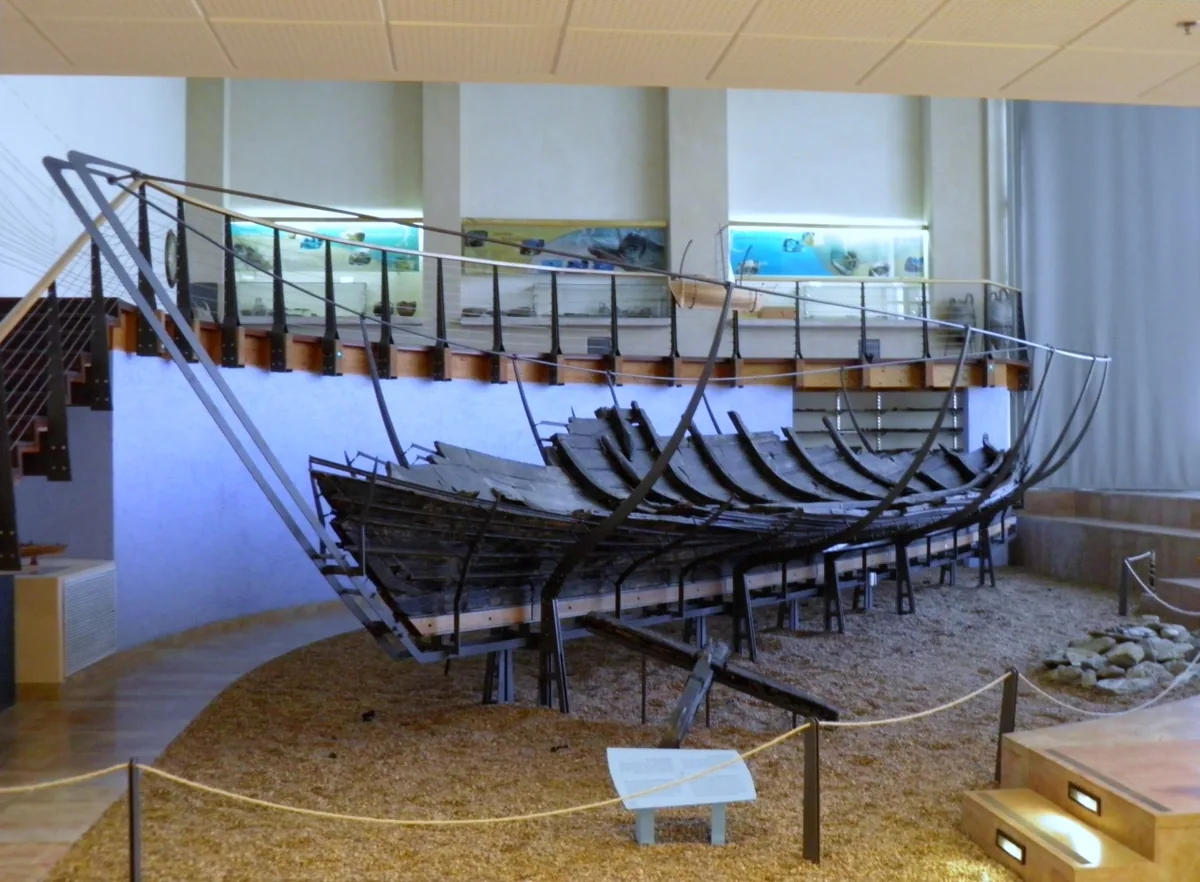
A day's visit that connects two museums: a fifth-century BCE ship in Haifa and a boat "from some 2,000 years ago" at Ginosar, with a possible ending on the shore where the sea keeps what it keeps. Five steps; visiting details on the official sites only.
The Ma'agan Mikhael ship → Hecht Museum, University of Haifa → The ancient Galilee boat from Ginosar …
Cultures
A culture with its own chronology is not measured by the Levant scheme.
Archaeological culture
The same assemblage of vessels appears on the site under two period pages. That is not a duplicated mistake but two classification frameworks, and the culture is the way to read them together.
The Levant · 0 objects
Civilization
Middle Kingdom, Second Intermediate Period, New Kingdom: Egypt's period names are Egypt's. The site shows them as the museum records word them and does not measure them by the Levant scheme.
Egypt · 4 objects
Selected reading
Research cases, questions of dating and the everyday lives behind an object.
CRAFT & MATERIAL CULTURE · IRON AGE
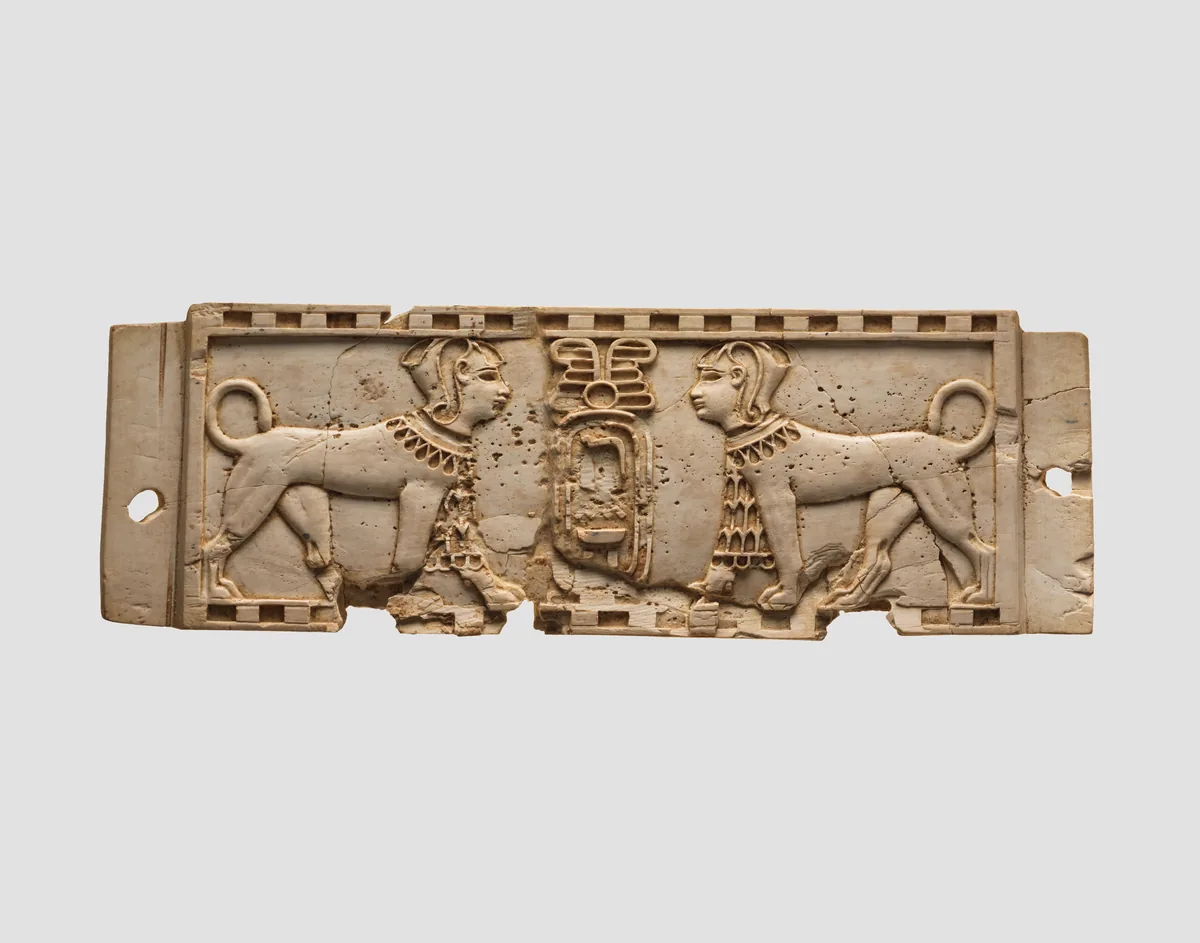
Decorated ivory panels raise questions about choices, resources and shared traditions. Read the argument without inventing a name for the owner.
READING A FIND · NAZARETH
What can a small excavation tell us about settlement, and why do successive layers not necessarily mean uninterrupted occupation?
INSCRIPTION · JERUSALEM
A short inscription opens a larger question about everyday life: how do we distinguish the surviving text from its proposed function?
RESEARCH & METHOD
Why a minting date differs from a burial date, and why a hoard is not a simple snapshot of money in circulation. Museum examples and the Qula case explain the distinction.
ANCIENT TECHNOLOGY · STONE
Assemblages from ‘En Ẓippori and ‘En Esur invite questions about organised work, proposed uses and the limits of evidence for conflict.
METHOD GUIDE · TIME & CONTEXT
A date connects a question, a sample and a method. A guide to reading ranges, comparisons and the strength of a chronological claim.
Begin with a place, material or question.
An object tells us more when we know where it was found, what lay beside it and how it was studied.
Places
A layered city, a settlement in Galilee and a changing coast: read objects in their landscape.
SITES & PLACES
An inscription and decorated ivory offer two different ways to read a city. Begin with the local context before widening the view.
SITES & PLACES
A focused gateway to settlement research at Nazareth and to reading an excavation without extending its conclusions beyond the evidence.
PLACE & LAYERS
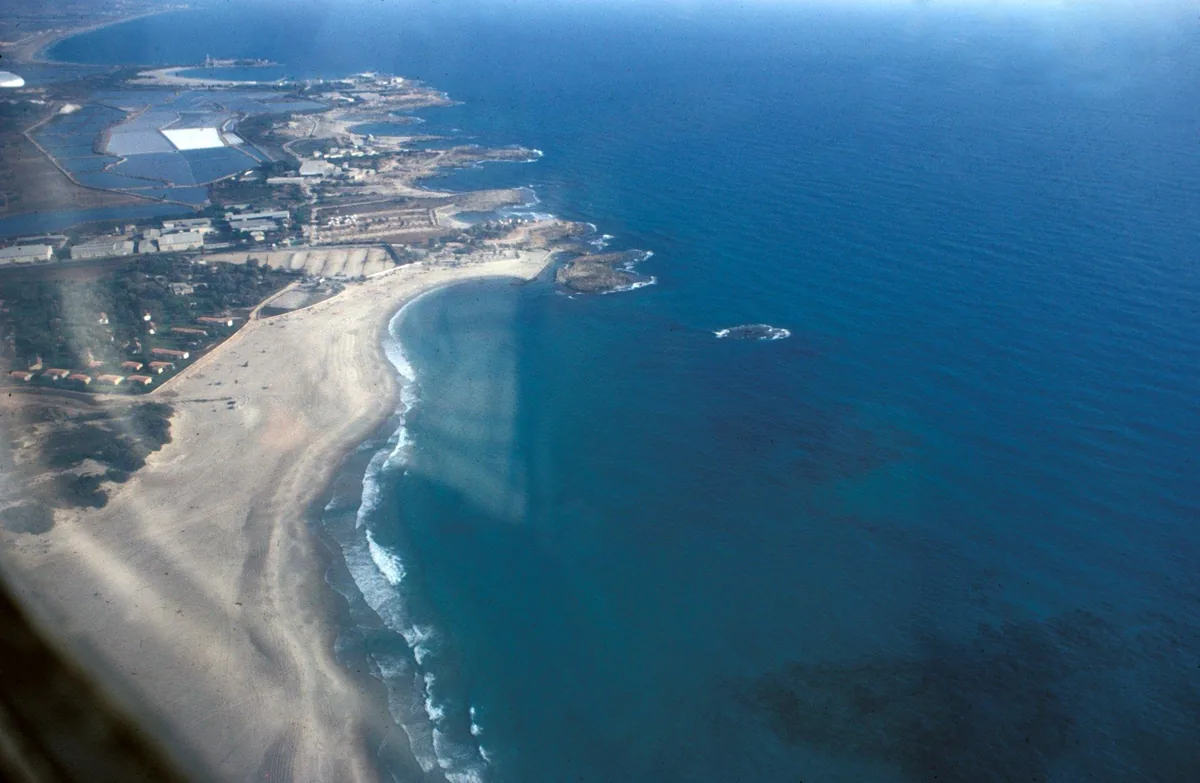
Ancient villages, maritime remains and objects of different dates share this coast. A guide to distinguishing a submerged site, cargo and an isolated find.
Schematic map: simplified coastlines, not to scale; positions follow the cited records.
The reader’s toolkit
Guides to building an argument, understanding layers and recognising what a single object cannot prove.
A practical route from question to evidence and from evidence to interpretation. You do not need to know every technical term to begin reading carefully.
Read the articleA date connects a question, a sample and a method. A guide to reading ranges, comparisons and the strength of a chronological claim.
Read the articleFloors, pits, fills and walls are evidence of actions. A worked example shows how their relationships form a sequence-and why a sequence is not yet a calendar.
Read the articlePhotograph, transcription, reconstruction and translation are different steps. A guide to reading names, numbers and meaning on objects.
Read the articleAbout
An independent knowledge project about archaeology and material culture in the Land of Israel. Original explanations, research references and a clear distinction between evidence and interpretation.
Our sources and approachAdjust the reading experience to suit you. These tools complement your browser and device accessibility settings. Changes apply to this page; they are kept for another visit only if you allowed that in the privacy dialog.
Your choices apply to this page only. Moving to another page restores the defaults.