INSCRIPTION · JERUSALEM
Names and sums on a stone in Jerusalem
A short inscription opens a larger question about everyday life: how do we distinguish the surviving text from its proposed function?
The explanations distinguish finds, interpretations and open questions. Sources appear at the end of the page.
Stone, letters and an interpretation
Esther Eshel and Nahshon Szanton published an ossuary-lid fragment bearing names and sums of money, found in debris beside Jerusalem’s Early Roman stepped street. They compare it with payment lists; its relationship to the ossuary remains uncertain. Source: R03.
Three separate questions
Begin with the material: what carries the marks? Move to the text: which letters and numbers can be read? Only then ask why someone wrote them. This order prevents an attractive explanation from taking the place of documentation. Even with an accounting interpretation, ask what the text supports directly and what comes from comparison.
“Receipt” is a convenient headline, but it can promise more than survives. For your reading notes, ask whether the transaction, payer and recipient are specified. Is the direction of payment clear? If the answers are unknown, retain a description such as “a list interpreted in relation to payments”. That makes the distance between a mark on stone and an economic story visible.
What to check in the publication
- Where do the authors mark missing letters, doubtful readings or restorations?
- Do the identification of the object and the interpretation of the writing rest on the same evidence?
- Are the comparisons similar in context as well as wording?
The value of a fragment
A story about a particular craftsperson is not necessary to make this object interesting. As a reading exercise, the inscription invites attention to the small questions behind any explanation: what survives, what is absent and which interpretation can be justified. Do not assign the proposal to a person or business that the source has not identified.
What is missing before a list becomes a receipt?
A list can connect a person and a number without explaining their relationship. To identify a receipt we would want to know whether the text records money received, money paid, a debt, a charge or another accounting action. This does not propose that every option fits this inscription equally. It makes explicit what an accounting interpretation must explain; evidence and linguistic analysis must decide.
As a teaching example only, imagine a fragment preserving two names beside numbers while its heading has disappeared. The numbers remain observations within the example, but the missing heading could alter their meaning. Restoring more words therefore need not increase knowledge. A description that leaves document function open can remain informative.
The writing support changes the question
Identifying the stone as part of an ossuary lid raises questions about the relationship between inscription and object. Were the activities connected? Was the stone a convenient writing surface? What would demonstrate reuse? The research leaves aspects unresolved; merely asking these questions does not identify a particular occupation or workshop.
Build separate timelines for stone and text. The first might include preparation, breakage and deposition, where supported. The second might include inscription, possible reading and alteration, if recorded. Do not fill undocumented stages. Bringing the timelines together reveals which events are associated and which are only potentially connected.
Everyday writing and the scale of a claim
Interest in a short inscription does not depend on recognising a famous individual. It can open questions about retaining information, relating people to amounts and choosing a writing surface. Yet one list cannot measure citywide literacy or describe the whole economy of its discovery street.
Compare the inscribed amphora in the inscriptions guide by asking what changes with the object: portability, visibility during use and available writing space. The comparison does not connect the two finds to one trade network. It illustrates different possible relationships between a material function and a textual one.
Scope of reading: publication details and abstract were verified. Full text was inaccessible; this page offers neither an independent transcription nor a judgement on the epigraphic reading.
Source
Sources and further reading
The research and references behind this page. Rights to external content remain with their owners.
- R03
A Second Temple Period Inscription on a Stone Ossuary Lid from the City of David, Jerusalem
Esther Eshel, Nahshon Szanton · 2023
Research record in this library
Follow the next connection
METHOD GUIDE · EVIDENCE & INTERPRETATION
How to read archaeological research
A practical route from question to evidence and from evidence to interpretation. You do not need to know every technical term to begin reading carefully.
4 min read, approximatelyRead the article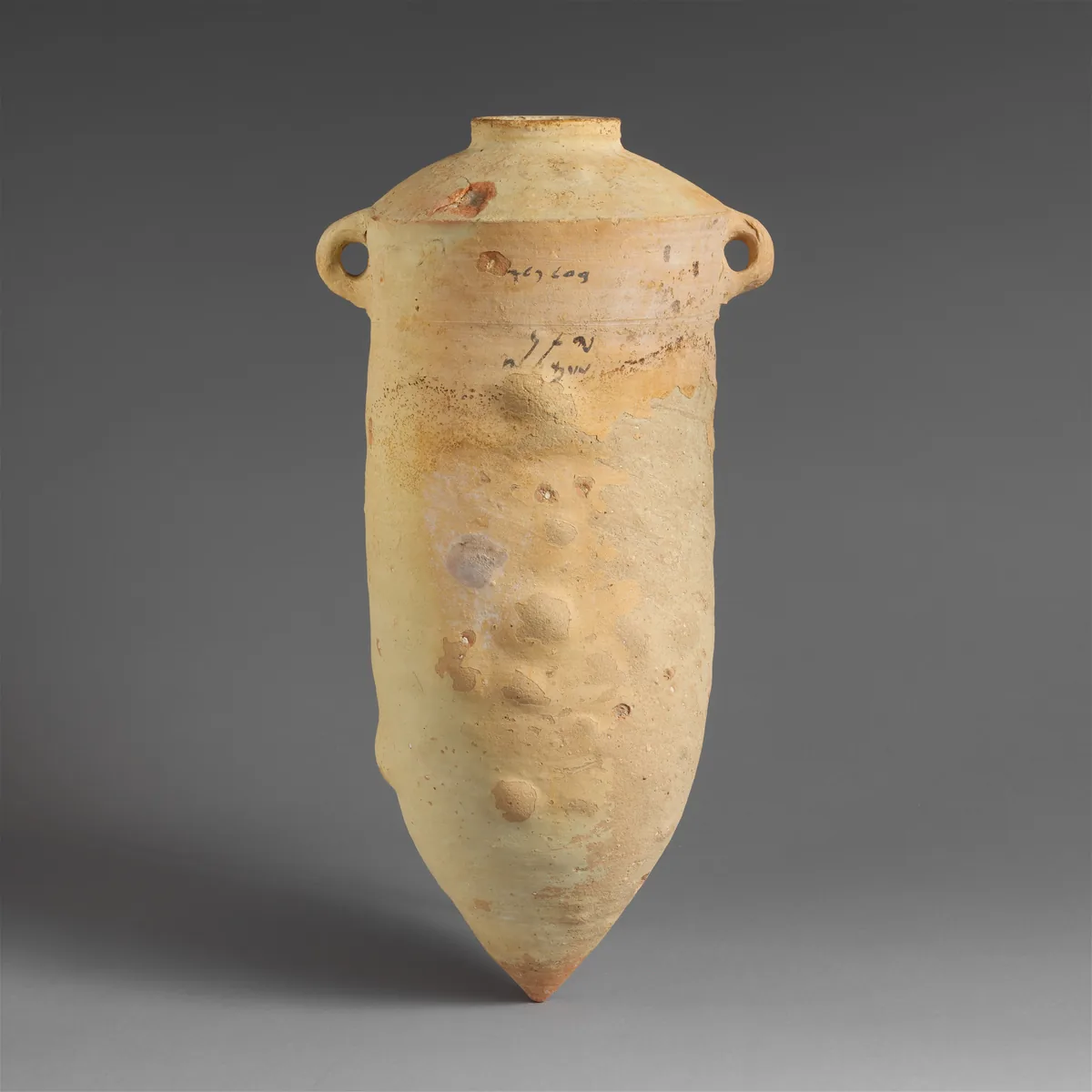
RESEARCH & METHOD
Reading an ancient inscription: from mark to claim
Photograph, transcription, reconstruction and translation are different steps. A guide to reading names, numbers and meaning on objects.
3 min read, approximatelyRead the article