INSCRIPTION · JERUSALEM
Names and sums on a stone in Jerusalem
A short inscription opens a larger question about everyday life: how do we distinguish the surviving text from its proposed function?
3 min read, approximatelyRead the articleKINDS OF FINDS
Words are only part of the evidence. Writing surface, preservation and find context belong to the same reading question.
3 articles and guidesThe British Museum catalogues Lachish Letter VIII as a pottery fragment with a Hebrew inscription. Source: C03. The Jerusalem article in this route concerns writing on stone. The comparison is a prompt to inspect the object carrying the text as well as the words.
When reading a publication, distinguish photograph, transcription, restoration and translation. Ask which marks remain visible, where text is missing and how the authors indicate doubt. You do not need to propose your own decipherment to understand the state of the evidence.
The names-and-sums article offers a focused exercise: examine the distance between what survives and the proposed function of the list. Continue to the research-reading guide to record evidence and interpretation separately.
Create four fields: object, marks, reading and context. Under object, record the identification and the source supplying it. Under marks, describe only what the photograph lets you inspect, such as the position of lines beside a break. Under reading, reference the published transcription and preserve its signs of uncertainty. Under context, ask where the object was found and whether this is its proposed original place of use. Moving a detail from a headline into a table does not make it independently verified.
The amphora pictured at the top is a Cypriot object catalogued with a Phoenician inscription, not the Jerusalem stone or the Lachish letter. Source: C16. Its caption supports an exercise in separating object identification from reading. A photograph may show vessel form while lettering is too small to inspect. In that case record that the reading comes from the catalogue; do not present it as your own observation.
Return to the Jerusalem names and sums. Which details support the proposed function, and which merely fit it? A name and amount may suit an accounting explanation, but identifying a particular transaction requires an additional argument. Leave that gap visible. The detailed inscription guide helps examine each step; the layers guide adds the question of how the text reached its discovery context. End your reading record with an open question and a source that might answer it.
This is an introduction through selected examples, not a catalogue of the region’s inscriptions. A new transcription or linguistic identification requires original documentation and relevant expertise; this page offers no independent decipherment.
Source
The research and references behind this page. Rights to external content remain with their owners.
British Museum
Esther Eshel, Nahshon Szanton · 2023
Research record in this libraryThe Metropolitan Museum of Art
INSCRIPTION · JERUSALEM
A short inscription opens a larger question about everyday life: how do we distinguish the surviving text from its proposed function?
3 min read, approximatelyRead the article
METHOD GUIDE · CONNECTIONS
Similar objects do not make a trade map. Distinguish raw materials, manufacture, style and movement through examples and research questions.
3 min read, approximatelyRead the article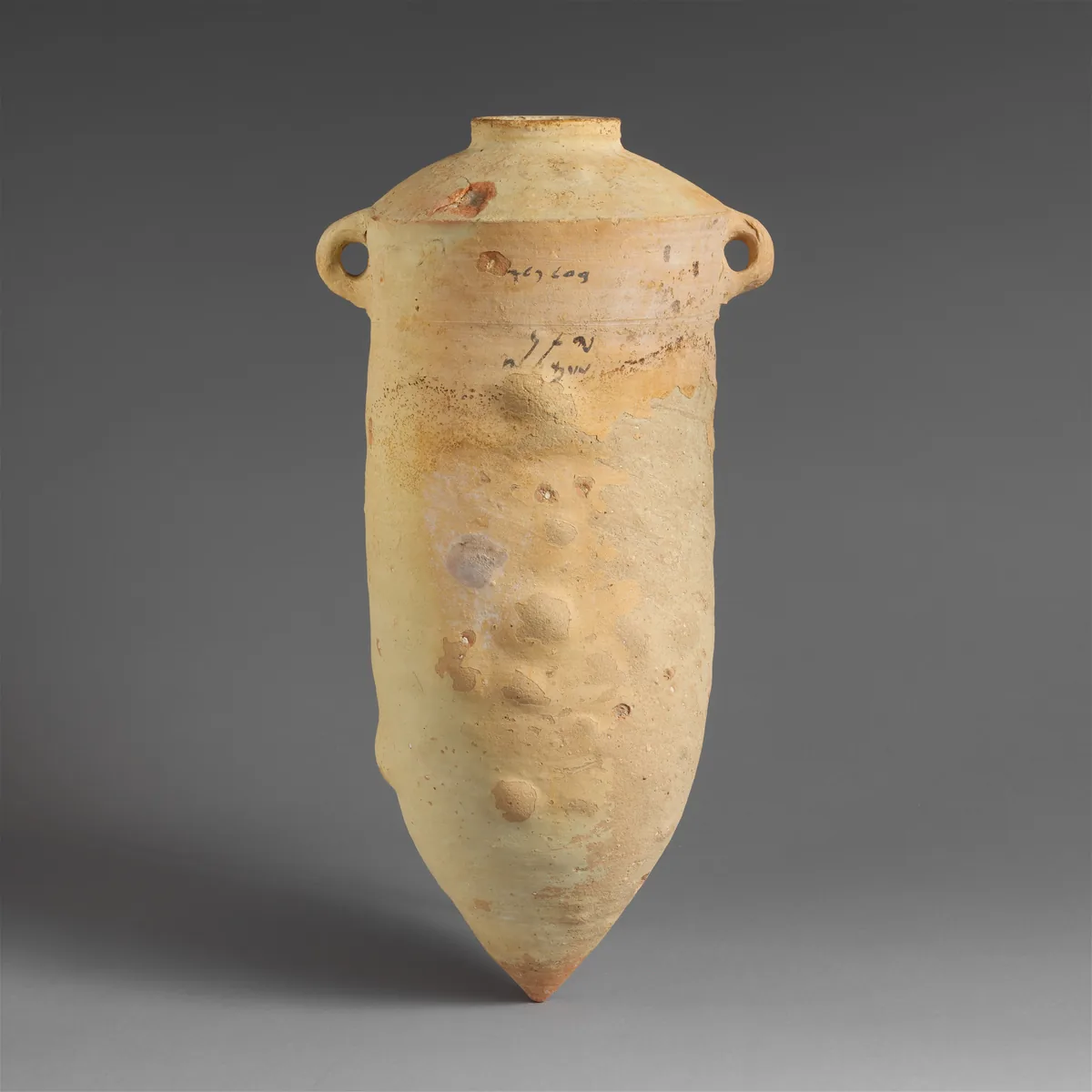
RESEARCH & METHOD
Photograph, transcription, reconstruction and translation are different steps. A guide to reading names, numbers and meaning on objects.
3 min read, approximatelyRead the articleAdjust the reading experience to suit you. These tools complement your browser and device accessibility settings. Changes apply to this page; only an explicit choice to remember them saves them for another visit.
Your choices apply to this page only. Moving to another page restores the defaults.