No photographText frame in place of a photograph
Lachish Letter VIII
- Material
- Pottery
- Dimensions
- Length 6.40 cm; width 9.50 cm; thickness 0.30-0.50 cm
- Date as given by the source
- Iron Age; no numeric date in the record
- Record number
- 125704 · 1959,0711.4
- Held by
- The British Museum, London
The source states no licence for its image, so it is not reproduced here
Museum recordDocumented object · Inscriptions · Iron Age, per the record's culture/period field
Lachish Letter VIII
A sherd of a pottery vessel with a Hebrew inscription in ink, found at Lachish and on display today in London. The ink is very faded, the record gives no numeric date, and it must not be confused with Letter II.
Date as given by the sourceIron Age; no numeric date in the recordAs worded by the source: Iron Age; the record gives no numeric date
What you see
What the object is
An ostracon: a body fragment of a wheel-made pottery vessel carrying a Hebrew inscription in ink. It measures 6.4 by 9.5 cm and is up to half a centimetre thick. The record notes that the sherd was repaired and that the ink is "very faded". This page has no photograph: the museum record states no image licence, so a text frame and a link to the record are shown instead. Source 1.
What the record says
Museum number 125704, registration number 1959,0711.4. Findspot: Lachish, "Bastion E.18:C". Culture/period field: Iron Age, with no year. The bibliography points to Lachish I: The Lachish Letters, pages 126 to 128. The object was donated by the Trustees of Sir Henry Wellcome after being on loan from them since 1937.
What the text says
The record states "Hebrew inscription" and gives no transcription or translation. This page offers no reading of its own: reading the Lachish letters belongs to the scholarly editions, and the article on reading ancient inscriptions explains how to separate photograph, transcription, restoration and translation. Anyone quoting the text should go to an edition and keep its marks of doubt.
Letter II is not Letter VIII
The British Museum holds several ostraca from Lachish, each with its own number: Letter II is 125702 (registration 1959,0711.2), Letter VIII is 125704 (registration 1959,0711.4). A similar name is no reason to merge details: dimensions, condition, display location and bibliography belong to the specific record. This page documents VIII only.
Its place on the timeline
The record names a period, "Iron Age", and no date. The object is therefore assigned to the site's Iron Age (1200 to 586 BCE) "per the museum", with no numeric range: any more precise date would need a further source.
Where it is now
The object is held by the British Museum in London. On 22 October 2026 the record stated that it is on display in Room 57 (Ancient Levant), Display Case 10. "On display" in a record is not a promise for a visit: the museum's collection guide advises checking the gallery before visiting.
The object's connections
The object's connections
Culture, period, place, type and holder: every connection comes from the record or a cited source.
Object
Lachish Letter VIII
Period
- The Iron AgePer the museum
Region
Kind of find
Displayed at
- The British Museum, London Room 57, Ancient Levant, Display Case 10
On the trail
Compare
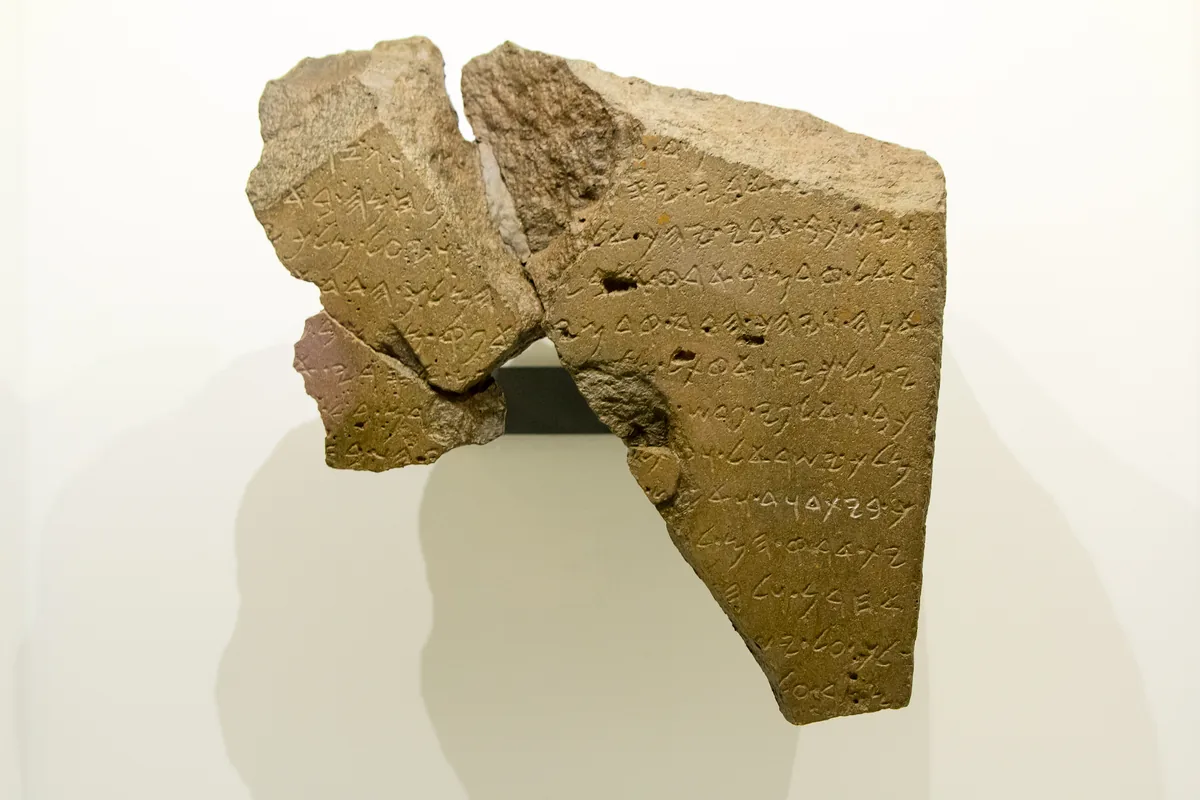
- The Tel Dan stele: "House of David"Two Iron Age inscriptions, two media (ink on a sherd versus carving in basalt), two museums
Source
Sources and further reading
The research and references behind this page. Rights to external content remain with their owners.
- 1
Lachish Ostracon VIII (Lachish Letter VIII), collection record 125704
British Museum · Checked
- 2
The Eastern Mediterranean and Syria, 1000 B.C.-1 A.D.
The Metropolitan Museum of Art · 2000 · Checked