Reading guide · 3 min read, approximately
Held, displayed, on loan: how to read a museum record
Three words that sound like degrees of the same thing answer three different questions. A guide to reading display status, record numbers and credit lines, with examples read on a known date.
The explanations distinguish finds, interpretations and open questions. Sources appear at the end of the page.
Three words, three questions
“Held”, “displayed” and “on loan” sound like degrees of the same thing, but they answer different questions. Held: which collection the object is registered in. Displayed: whether you can see it now, and where. On loan: whether it is temporarily somewhere else. A good museum record almost always answers the first, often the second, and only sometimes the third.
On view, Not on view: what the record actually says
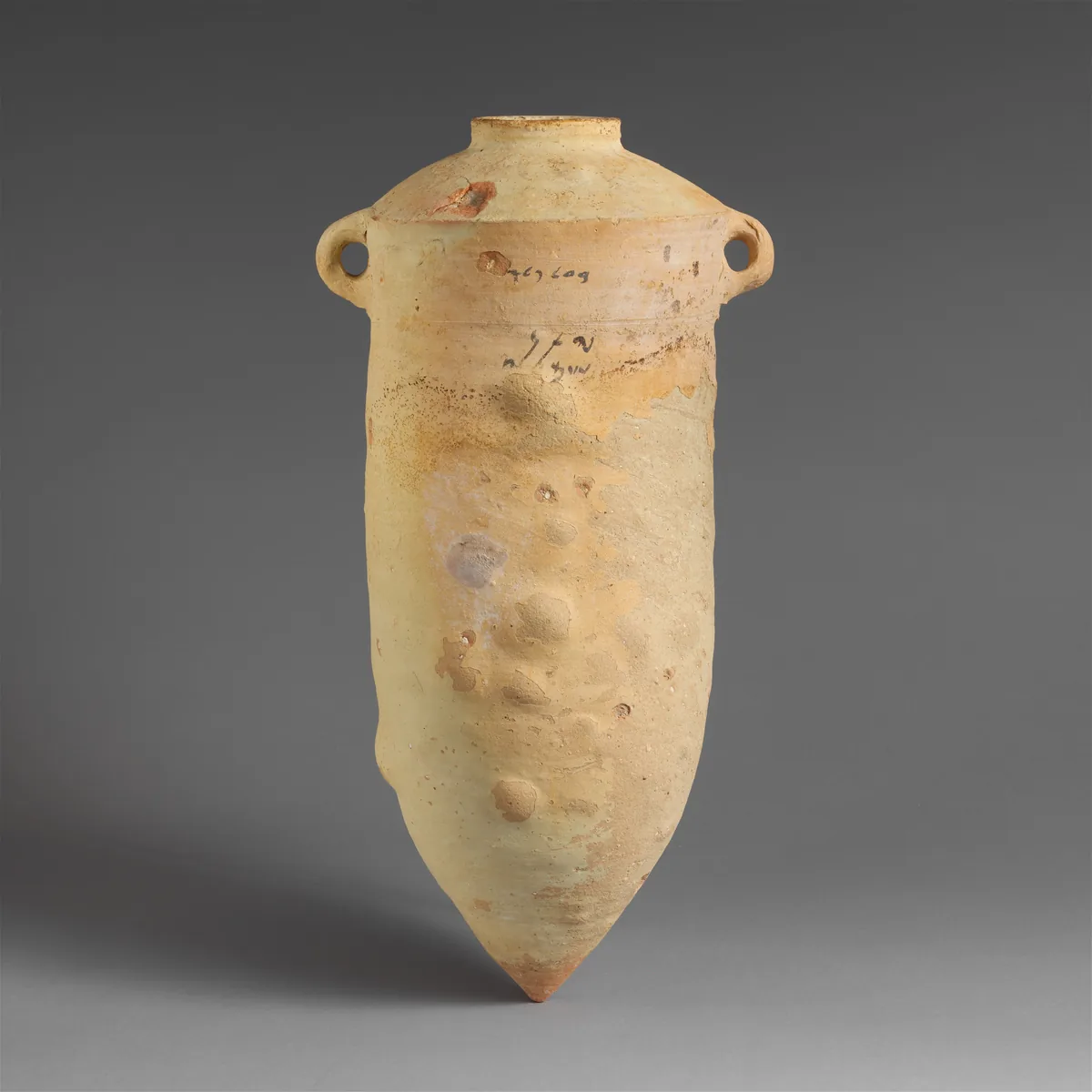
At The Metropolitan Museum of Art every online record states a display status. On 22 October 2026 the record of the shabti from the tomb of Sennedjem (86.1.23) read “On view at The Met Fifth Avenue in Gallery 126”, and the record of the Roman oil lamp from the Cesnola Collection (74.51.2256) read “Not on view”. Sources 2, 3. The record of the Cypriot amphora with a Phoenician inscription (74.51.2300) read “On view… Gallery 171” the same day. Source 1. The British Museum uses the wording “Not on display”, for example in the record of the silver coin of the Second Revolt (1888,0512.36). Source 4.
All three wordings describe a state at the moment of reading. Museums rotate displays, close galleries for renovation and lend objects. A sentence such as “the object is on view in Gallery 171” is therefore true only together with a date: when the record was read. Without the date it is a quotation that has lost its context.
A holder is not a displayer
“Held by Museum X” is a fact of registration: the object belongs to the collection or is deposited in it. It does not say the object is on display. Much of any museum collection is in storage, and online records document objects that have not been shown for years; the oil lamp in record 3 is an example. The reverse is also true: a displayed object may be on loan from another institution, in which case the holder is not the displayer. Each statement needs its own source.
What to look for in a record
- Record number (accession number): the stable identifier of the object within the collection. Similar numbers are not the same object.
- Credit line: how the object entered the collection - purchase, gift, excavation. For the shabti: Funds from various donors, 1886; for the amphora and the lamp: The Cesnola Collection, purchased by subscription 1874-76.
- Display status and date: the exact wording, and when you read it.
- Findspot: only if the record gives one. For the shabti: Deir el-Medina, Tomb of Sennedjem (TT 1); for the amphora: not stated.
- Dating as worded by the record: with “ca.” and ranges as written, not shortened to a single year.
Before a visit
Check the official record on the day of the visit or close to it, not only a page that quotes it - including this one. If the record gives no display status, do not infer from it that the object is or is not on view. A gallery named in a record is an address to check, not a promise.
How this site records it
On the object pages here, “held by” and “on display at” are two separate fields. The first rests on the official record. The second appears only when the record stated a display status, and it carries the date on which the record was read. When we have not checked, the field says so explicitly. We do not infer display from holding, and we do not write “on loan” without a source that says so.
Objects
Objects discussed in this article
Source
Sources and further reading
The research and references behind this page. Rights to external content remain with their owners.
- 1
Terracotta amphora with Phoenician inscription, collection record 74.51.2300
The Metropolitan Museum of Art · Checked
- 2
Shabti, Tomb of Sennedjem (TT 1), collection record 86.1.23
The Metropolitan Museum of Art · Checked
- 3
Terracotta oil lamp, collection record 74.51.2256
The Metropolitan Museum of Art · Checked
- 4
Silver coin of the Second Revolt, overstruck on a denarius of Hadrian, museum number 1888,0512.36
The British Museum · Checked