The photograph could not be loaded
Documented object · Pottery · Canaanite, per the catalogue
Canaanite jar
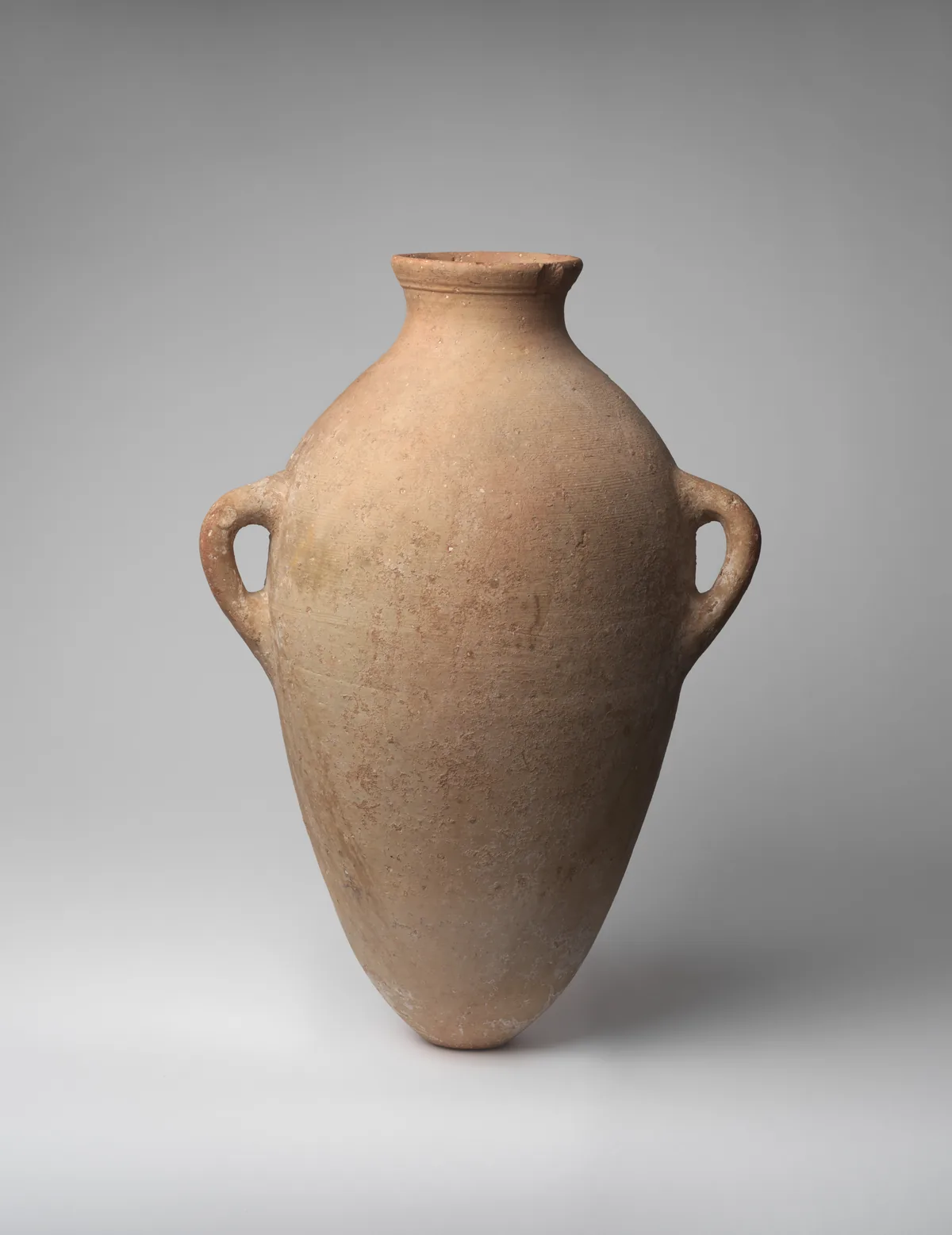
A large Late Bronze Age clay jar that the museum records as "Canaanite" and "Levant" with no findspot. A pointed base and two handles: a form made for storage and transport, which says something about the vessel before anyone knows where it came from.
Date as given by the sourceca. 1500-1400 BCEAs worded by the source: ca. 1500-1400 BCE; Late Bronze Age
What you see
What you see
A tall clay jar, 59.5 cm high, with a broad body, two small handles on the shoulder and a pointed base. The form suits storage and transport: the pointed base rests in a stand or in sand, and the handles allow lashing. The photograph is the museum's own collection image, uncropped.
What the record says
The collection record dates the jar "ca. 1500-1400 BCE" and assigns it to the Late Bronze Age and to Canaanite culture. The recorded geography is "Levant" only; the provenance field is empty and no findspot is given. The jar was donated in 2001 and is not currently on view. Source 1.
What can and cannot be inferred
"Canaanite" and "Levant" are the catalogue's classification, not excavation documentation. One can say the museum identifies the jar as a Levantine type of the second millennium BCE; one cannot say which site it came from, in what context it was found or what it held. The guide on pottery making, use and dating explains why those are three separate questions.
Its place on the timeline
The record names a period, "Late Bronze Age", whose numeric range lies inside the site's Bronze Age frame (3300 to 1200 BCE, per the curatorial chronology 3). The jar is therefore placed in the Bronze Age here "per the museum".
Where it is now
The jar is held by The Metropolitan Museum of Art in New York, record 2001.761.9. On the day of checking, 22 October 2026, the record stated "Not on view": held, not displayed. The article on held, displayed and loaned explains the difference.
The object's connections
The object's connections
Culture, period, place, type and holder: every connection comes from the record or a cited source.
Object
Canaanite jar
Period
- The Bronze Age: cities and connectionsPer the museum
Region
Kind of find
On the trail
- Trade across the seaStep 2
Compare
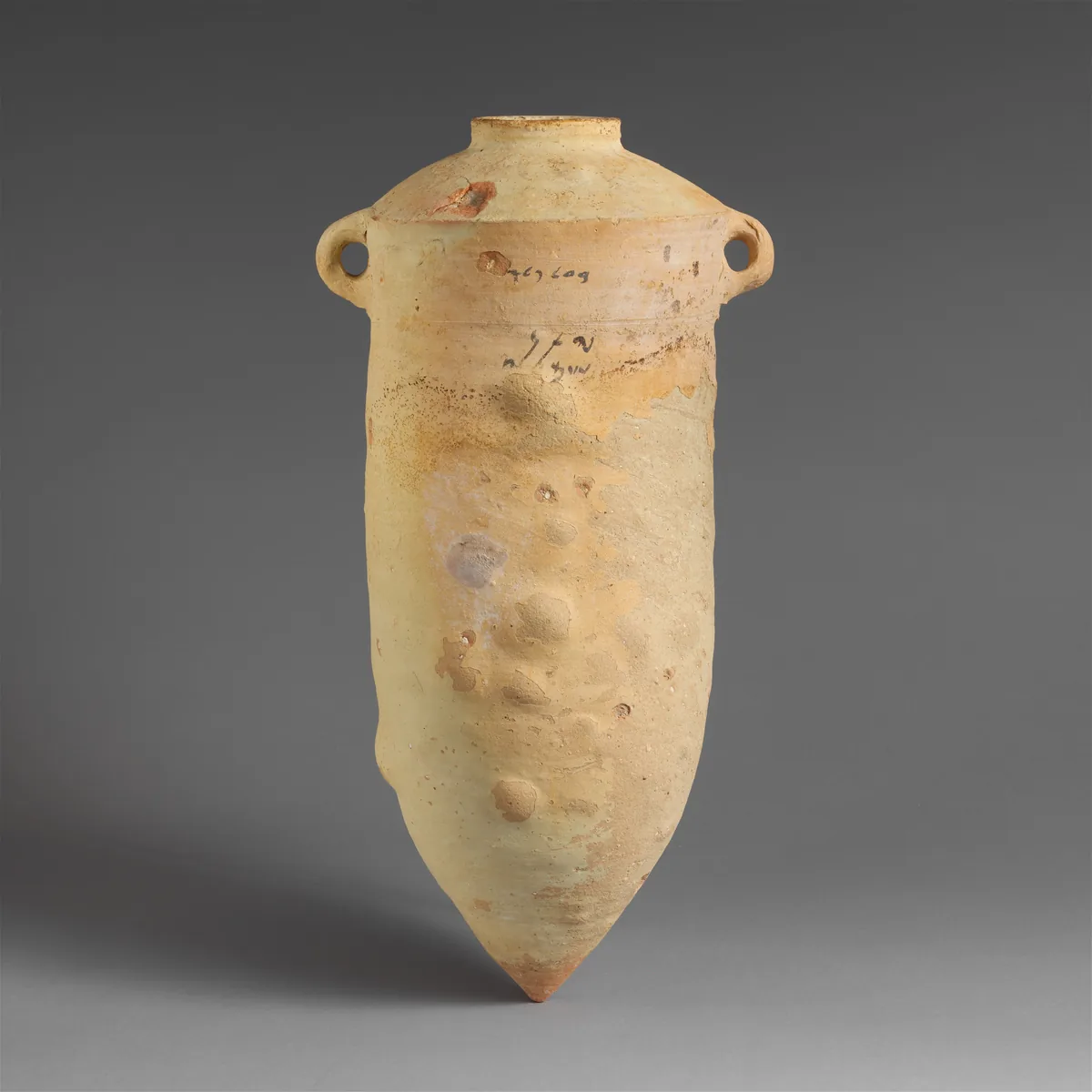
- Cypriot amphora with a Phoenician inscriptionTwo clay storage or transport jars: form, handles and pointed base
Source
Sources and further reading
The research and references behind this page. Rights to external content remain with their owners.
- 1
Canaanite jar, collection record 2001.761.9
The Metropolitan Museum of Art · Checked
- 2
The Eastern Mediterranean and Syria, 8000-2000 B.C.
The Metropolitan Museum of Art · 2000 · Checked
- 3
The Eastern Mediterranean and Syria, 2000-1000 B.C.
The Metropolitan Museum of Art · 2000 · Checked