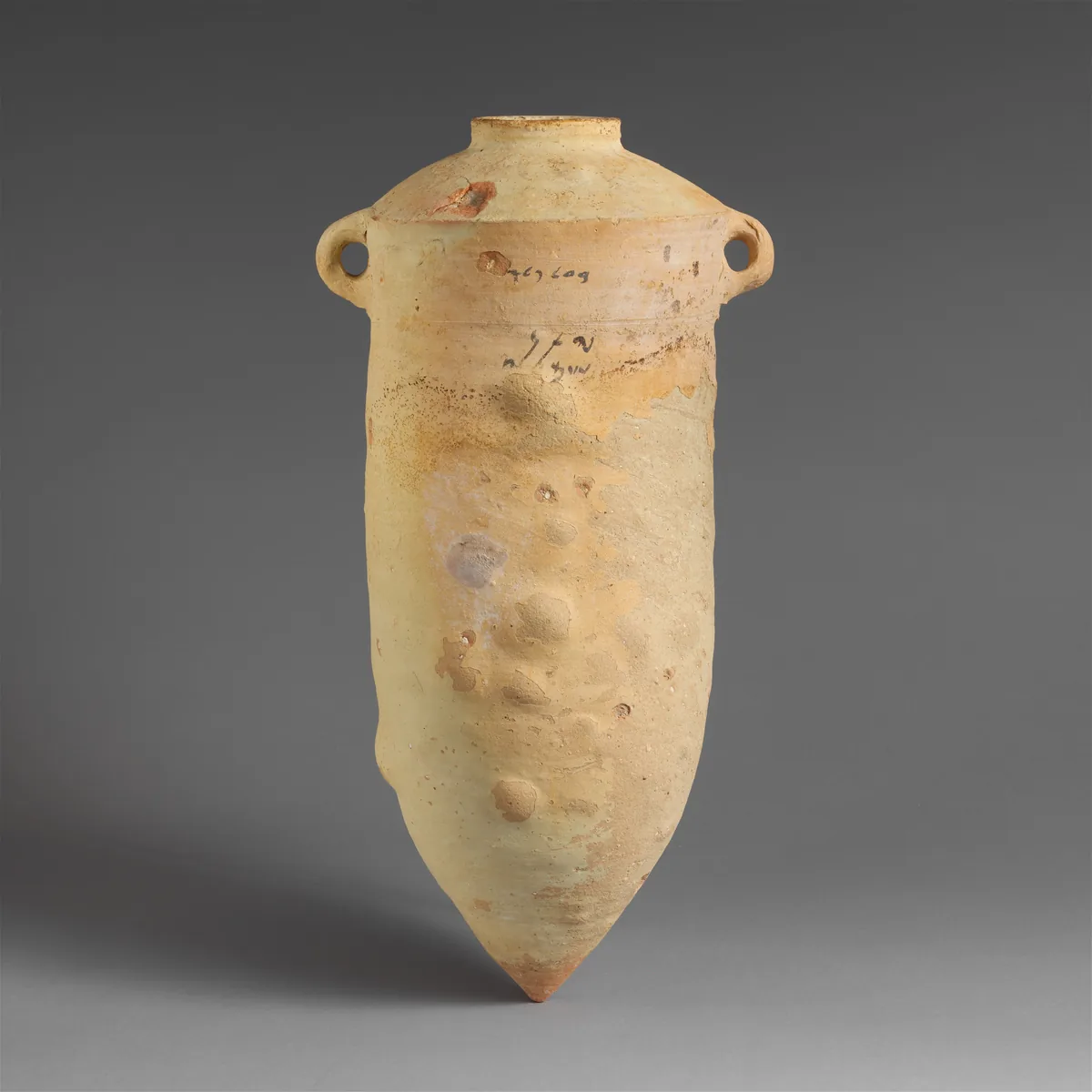
The photograph could not be loaded
Documented object · Pottery · Cypriot, per the catalogue
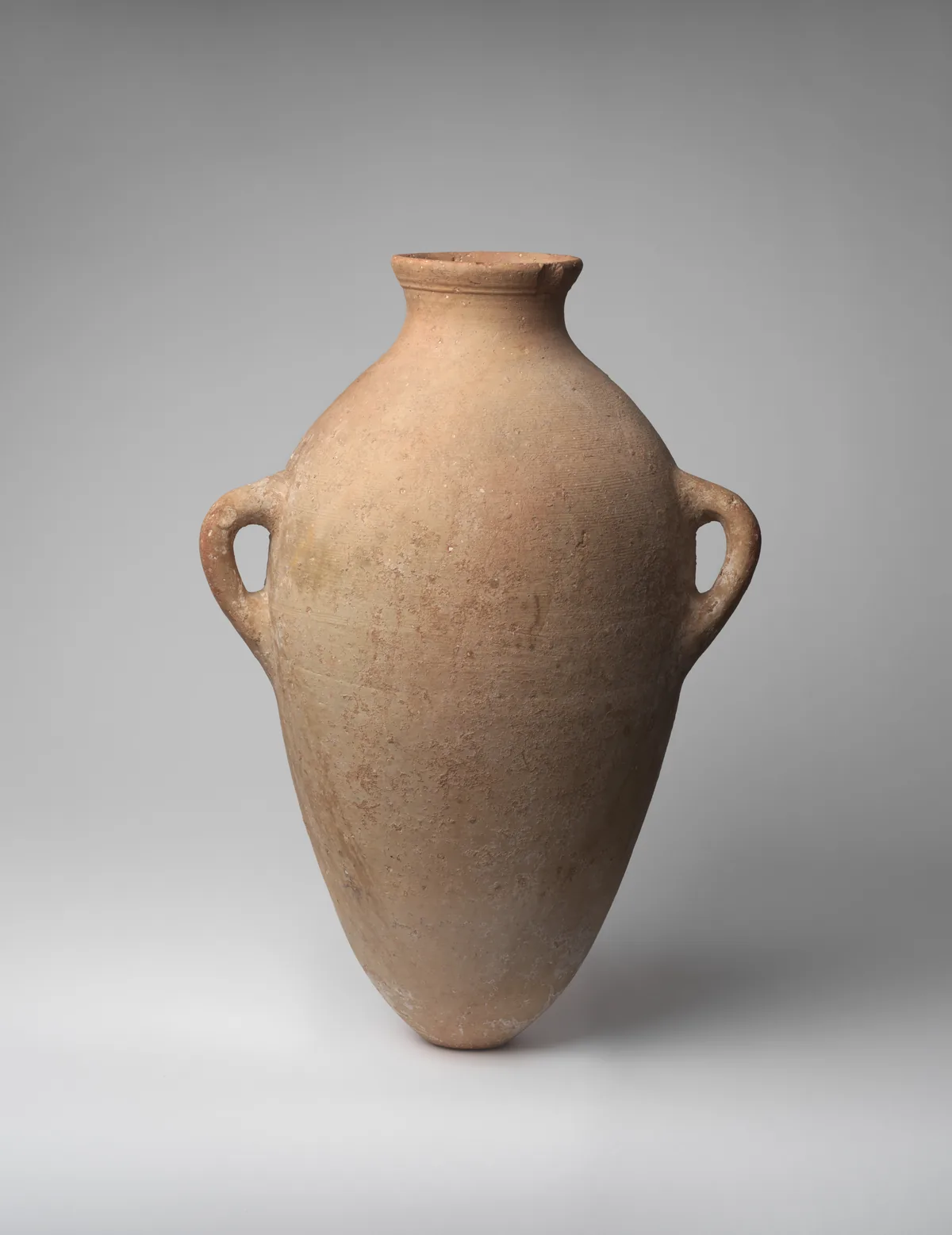
Cypriot jug with white-painted decoration
A small clay jug with white decoration, dated to the Middle Cypriot period. In the site's period scheme for Cyprus it is placed in the Middle Bronze Age, by the period name in its record.
Date as given by the sourceca. 1900-1800 BCEAs worded by the source: ca. 1900-1800 BCE; Middle Cypriot I
What you see
What you see
A clay jug 23.2 cm high, with a rounded body, a narrow neck and a handle. The decoration is lines in white on a darker ground. The record places the jug within the Cypriot tradition of white-painted decoration but does not name this jug's ware directly. The photograph is the collection image, uncropped. Source 1.
What the record says
The record dates the jug "ca. 1900-1800 BCE" and assigns it to Middle Cypriot I and to Cypriot culture. The record's description notes that white-painted decoration was already the predominant style in the Cypriot Chalcolithic, and that by the eighteenth century BCE White Painted Ware had become the dominant type. No findspot is given. The jug is not currently on view.
A Cypriot scheme, not a Levantine one
"Middle Cypriot I" is a period name in the scheme of Cyprus, not of the Levant. The site has its own period scheme for Cyprus, and there the jug is placed in the Middle Bronze Age (about 2000 to 1650 BCE) on the basis of the period name in the record. Under the Cyprus tab of the timeline it appears in the Bronze Age group, while the Cypriot amphora with the Phoenician inscription, which the catalogue dates some 1,300 years later, appears in the group from the Geometric to the Classical period. The comparison between them shows how long the island's ceramic sequence is.
Where it is now
The jug belongs to the Cesnola Collection and is held by The Metropolitan Museum of Art, record 74.51.1316. On 22 October 2026 the record stated "Not on view".
The object's connections
The object's connections
Culture, period, place, type and holder: every connection comes from the record or a cited source.
Object
Cypriot jug with white-painted decoration
Period
- The Middle Bronze Age in Cyprus: up to a century apartPer the museum
Region
Kind of find
On the trail
- Trade across the seaStep 4
Compare
- Cypriot amphora with a Phoenician inscriptionTwo Cypriot clay vessels from the Cesnola Collection, about 1,300 years apart
Source
Sources and further reading
The research and references behind this page. Rights to external content remain with their owners.
- 1
Terracotta jug, collection record 74.51.1316
The Metropolitan Museum of Art · Checked