Reading trail · 6 steps
Trade across the sea
What attests to trade and what only looks like it: a jar from the Levant, two vessels from Cyprus, ivory from Nimrud and ivories from Jerusalem. Six steps, each with what its record knows and what it does not.
The photograph could not be loaded
Four objects in one collection and one article on objects excavated in Jerusalem. The trail does not tell a story about a trade route; it shows what each record says about origin, findspot and material, and where a comparison between two vessels ends. A vessel with no findspot attests only to itself; an excavated object lets one ask how it got there.
Three of the objects are photographed, because the museum marks their images as public domain. Every step has a reason and a source, and a date on which they were checked.
The steps
-

The photograph could not be loaded
Photograph of the object: Scarab with a crocodile-headed figure Base of a scarab seal from Canaan, ca. 1640-1550 BCE, with a crocodile-headed figure. Glazed steatite museum comparison; The Met, 10.130.398. No specific findspot is stated.The Metropolitan Museum of Art · 10.130.398 · Gift of Helen Miller Gould, 1910 · CC0 · Source · CC0 1.0 Step 1 · METHOD GUIDE · CONNECTIONS
Materials and exchange: reading connections between places
Similar objects do not make a trade map. Distinguish raw materials, manufacture, style and movement through examples and research questions.
Open this stepWhy this step
The tools for reading: what is needed to claim that a material or a vessel came from afar, and the difference between a resemblance of form and evidence. The article sets the questions the following objects are tested by.
-
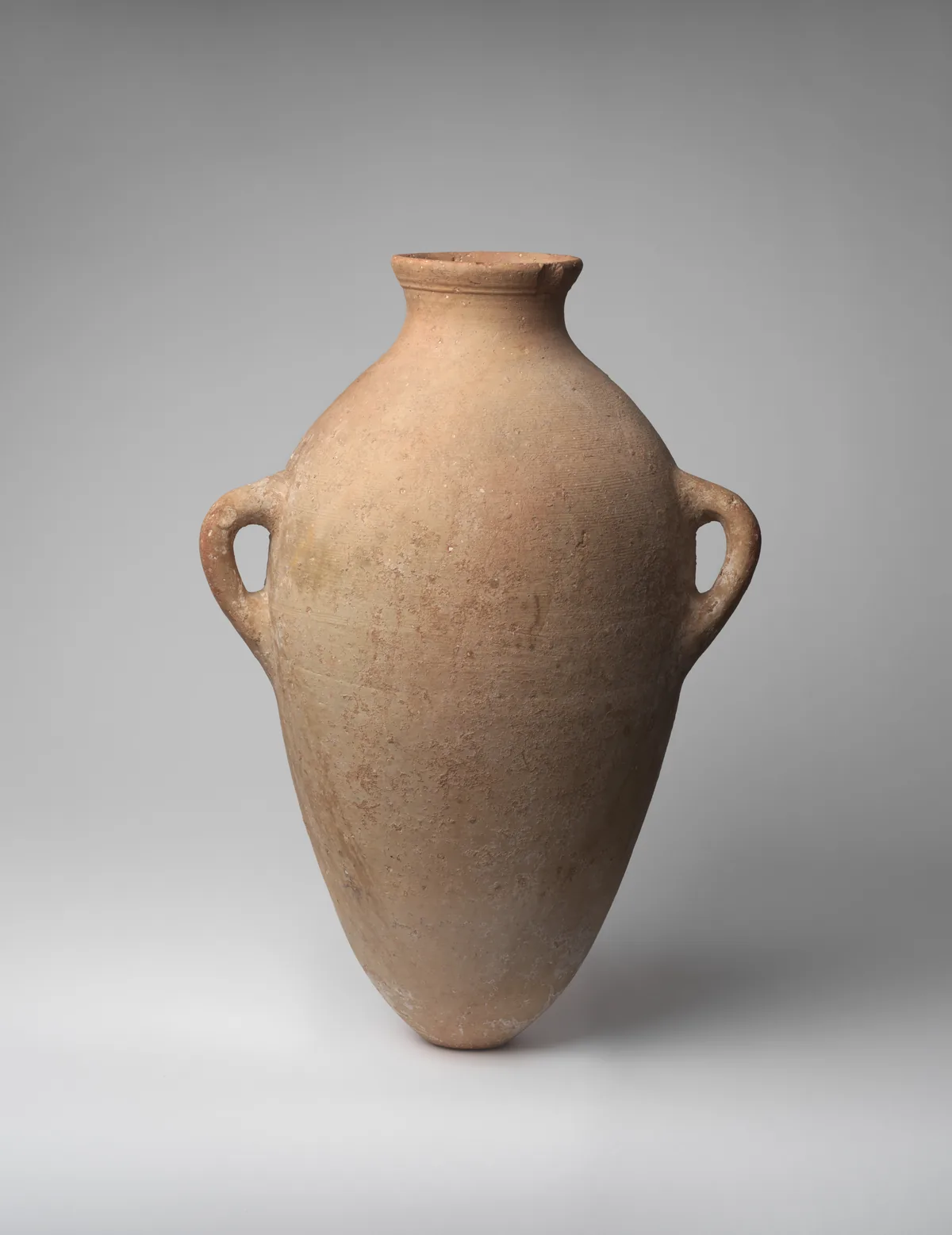
Detail of the photograph: Canaanite jarThe Metropolitan Museum of Art · 2001.761.9 · Gift of Bess Myerson, 2001 · CC0 · Source · CC0 1.0 Step 2 · Object
Canaanite jar
A large Late Bronze Age clay jar that the museum records as "Canaanite" and "Levant" with no findspot. A pointed base and two handles: a form made for storage and transport, which says something about the vessel before anyone knows where it came from.
Open this stepWhy this step
A storage or transport vessel from the Levant, with no findspot in the record. The form called a "Canaanite jar" is the starting point for the comparison with the amphora in the next step: two two-handled vessels, two possible purposes.
-
The photograph could not be loaded
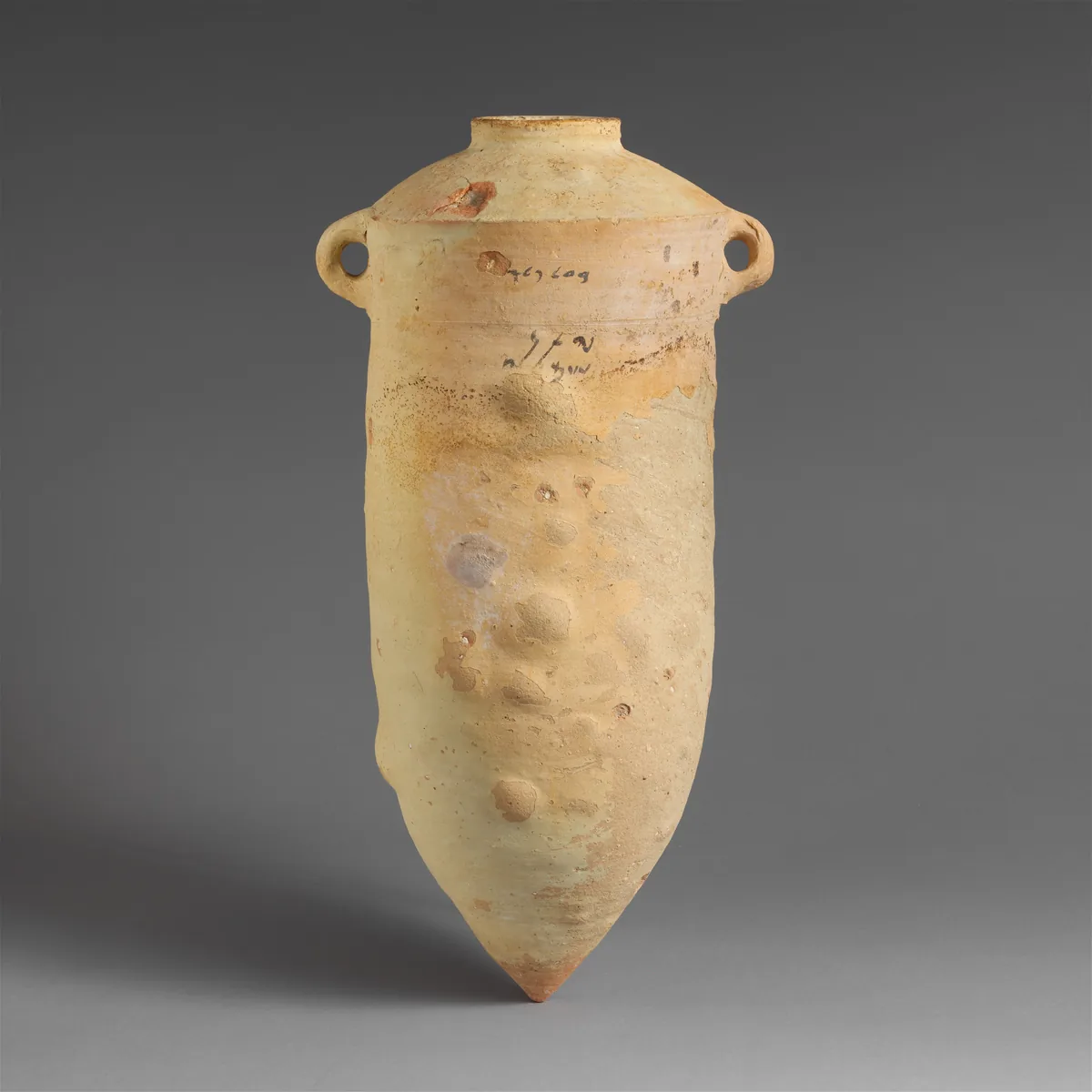
Photograph of the object Cypriot amphora with a painted Phoenician inscription, sixth-fifth century BCE. A comparison for writing on vessels; not the Jerusalem inscription. The Met, 74.51.2300.The Metropolitan Museum of Art · 74.51.2300 · The Cesnola Collection, Purchased by subscription, 1874-76 · CC0 · Source · CC0 1.0 Step 3 · Object
Cypriot amphora with a Phoenician inscription
A Cypriot vessel, a Phoenician inscription and a findspot nobody recorded: one object that teaches us to separate what is written on it from where it came from.
Open this stepWhy this step
A Cypriot vessel with a Phoenician inscription. The inscription tells of its writer, not necessarily of the vessel's origin or its route; that is the distinction the article in the first step asks for.
Per source 2 · Verified -

The photograph could not be loaded
Photograph of the object Decorated Cypriot pottery jug, ca. 1900-1800 BCE. A comparison from Cyprus, not a local excavation find. The Met, 74.51.1316.The Metropolitan Museum of Art · 74.51.1316 · The Cesnola Collection, Purchased by subscription, 1874-76 · CC0 · Source · CC0 1.0 Step 4 · Object
Cypriot jug with white-painted decoration
A small clay jug with white decoration, dated to the Middle Cypriot period. In the site's period scheme for Cyprus it is placed in the Middle Bronze Age, by the period name in its record.
Open this stepWhy this step
A much earlier Cypriot vessel from the same collection, with no inscription and no findspot. Here the comparison is between two records of the same museum: what changes when the inscription is missing, and what remains (form, decoration, classification).
-
The photograph could not be loaded
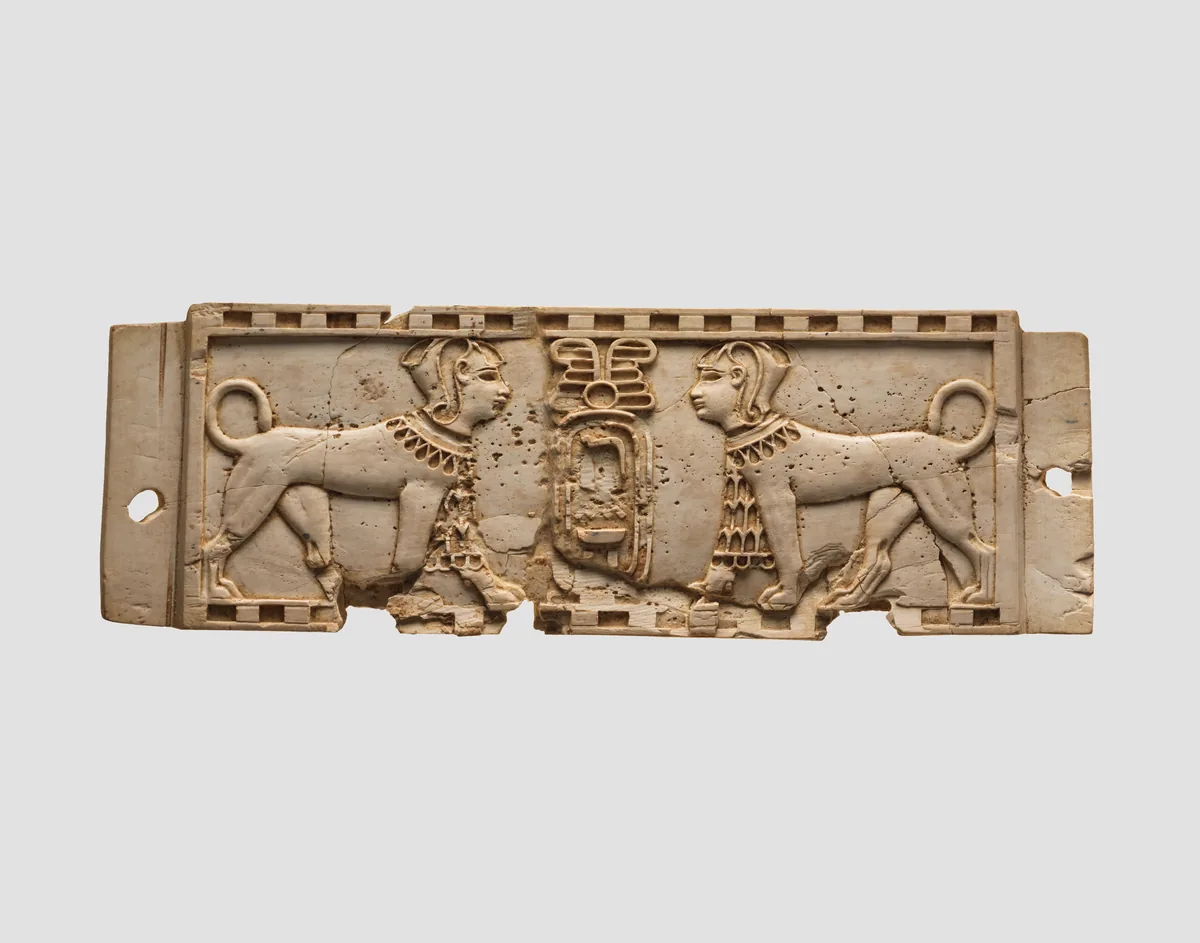
Photograph of the object Ivory furniture plaque from Nimrud, Mesopotamia, ca. 9th-8th century BCE, in Phoenician style. Shown for comparison; this is not one of the Jerusalem ivories. The Met, 62.269.4.The Metropolitan Museum of Art · 62.269.4 · Rogers Fund, 1962 · CC0 · Source · CC0 1.0 Step 5 · Object
Ivory plaque from Nimrud with two sphinxes
An ivory furniture plaque excavated in 1962 at Fort Shalmaneser, Nimrud: two sphinxes flanking a cartouche. The record attributes the style to the Phoenician and notes that none of the inlays survived.
Open this stepWhy this step
A material from afar: ivory, worked in a style the museum describes as Phoenician, and found in excavation at Nimrud in Iraq. The step that shows what happens when there is a findspot: one can ask how the material and the style got there.
Per source 4 · Verified -
Detail of the photograph: Ivory plaque from Nimrud with two sphinxes A sphinx (one of two).The Metropolitan Museum of Art · 62.269.4 · Rogers Fund, 1962 · CC0 · Source · CC0 1.0 Step 6 · CRAFT & MATERIAL CULTURE · IRON AGE
Jerusalem ivories: craft, decoration and connections
Decorated ivory panels raise questions about choices, resources and shared traditions. Read the argument without inventing a name for the owner.
Open this stepWhy this step
The ending in Jerusalem: Iron Age ivories found in excavation in the city, and an article that compares them with the Nimrud ivories carefully, without transferring facts from one object to another.
Per source 4 · Verified
Places on the trail
Where it was found
- CyprusRegion per the record; no exact findspot stated
- The LevantRegion per the record; no exact findspot stated
- NimrudFindspot per the record
Schematic map: simplified coastlines, not to scale; positions follow the cited records.
End of the trail
End of the trail
From here, continue to an object, a period or another trail.
Back to the overviewSource
Sources and further reading
The research and references behind this page. Rights to external content remain with their owners.
- 1
Canaanite jar, collection record 2001.761.9
The Metropolitan Museum of Art · Checked
- 2
Terracotta amphora with Phoenician inscription, collection record 74.51.2300
The Metropolitan Museum of Art · Checked
- 3
Terracotta jug, collection record 74.51.1316
The Metropolitan Museum of Art · Checked
- 4
Cloisonné furniture plaque with two sphinxes flanking a cartouche, collection record 62.269.4
The Metropolitan Museum of Art · Checked
- 5
Scarab with a Crocodile Headed Figure Holding a Flower, collection record 10.130.398
The Metropolitan Museum of Art · Checked