CRAFT & MATERIAL CULTURE · IRON AGE
Jerusalem ivories: craft, decoration and connections
Decorated ivory panels raise questions about choices, resources and shared traditions. Read the argument without inventing a name for the owner.
The explanations distinguish finds, interpretations and open questions. Sources appear at the end of the page.
A starting point
A preliminary report by Reli Avisar and colleagues presents decorated ivory panels from Building 100 at Jerusalem’s Giv‘ati Parking Lot excavations. The authors discuss them in relation to urban elites and wider Near Eastern connections in the later Iron Age. Source: R05.
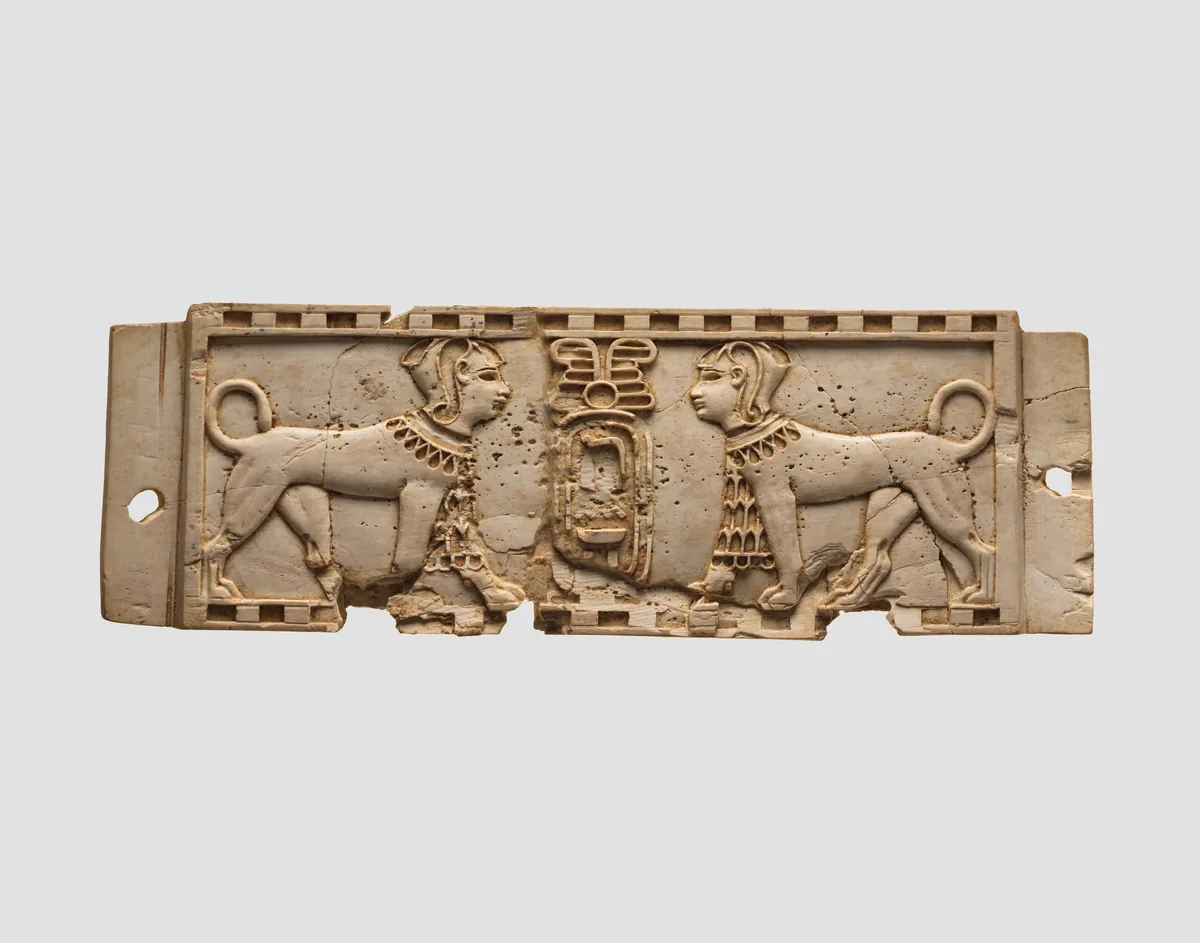
For visual comparison only: the opening photograph shows a different museum object, found at Nimrud. It is not one of the Jerusalem ivories discussed in the study. Identification and rights details appear in the caption.
Concentration, movement and mounting
Most recorded fragments came from Room B; others occurred in Persian fills or secondary contexts. Back grooves support glued mounting, while some holes are interpreted as possible repairs. Source: R14. Deposition and attachment concern different actions. A fragment’s later context does not automatically change its manufacturing date.
From material to a social question
Read through three lenses: the material, the work invested in it and its find context. Do not jump directly from “ivory” to an owner’s identity. Separate each step in the argument: physical description, comparison and social explanation. That division makes it easier to return to the source and locate exactly where a conclusion is constructed.
When decoration is compared, ask whether the similarity concerns a theme, a technique or one particular detail. Then ask what evidence would favour the movement of an object over the movement of an idea or a skill. These are alternatives to investigate, not claims about how these particular panels reached Jerusalem.
A building has a history too
A separate chronological study by Regev and colleagues combines excavated contexts with radiocarbon measurements in Jerusalem. It illustrates why a building’s lifespan should be distinguished from objects remaining in its final phase. Source: C02. When reading about the ivories, return to the question of which event is being dated: construction, use or deposition.
Reading with the gaps intact
- Look for documented features before reading the discussion.
- Check whether a comparison is offered as a secure identification or a possibility.
- Leave users and routes of arrival unidentified when the evidence does not establish them.
A plaque belongs to a system of objects
Understanding decorated ivory sometimes requires considering a missing companion material. A plaque may be part of a composite object, making its back, edges and attachment marks as important as its decoration. This does not establish how Jerusalem's panels were mounted; it identifies a question for their documentation. An attractive face alone is not an assembly plan.
For the photographed Nimrud comparison, the catalogue describes pierced attachment tenons and recesses whose inlays have not survived. These details belong to this plaque only. Source: C17. They show how attachment and absence can support a functional proposal without making every ivory panel technically identical.
Style, manufacture and movement
Three labels can coexist without being equivalent: findspot, attributed style and raw-material source. Style compares features; it is not a coordinate. A motif known in several places needs additional evidence before it can locate a workshop or track an individual object.
Consider how the explanation changes when a finished object moves rather than knowledge of its decoration. The first raises transport questions; the second raises learning, imitation or mobile-craftsperson questions. These are alternative reading models, not findings about the Jerusalem ivories. Distinguishing them helps identify evidence that could strengthen each.
From a valuable object to a social group
An argument about an urban elite connects material evidence with a social setting. Understand what distinguishes this context from others: workmanship, rarity, combinations of materials or building features. Do not replace comparison with “ivory is expensive”, or turn a proposed status into an owner's name and occupation.
Ask who is missing from the picture: the maker, user and people maintaining the place of display. Research need not identify everybody to be informative. These questions expand a luxury object into an enquiry about work, upkeep and movement while preserving the distinction between documentation and what we would like to know.
Updated reading scope: alongside the R05 abstract, context and technical sections on pp.60-67 of an author-uploaded copy were checked (R14). We do not claim a complete catalogue review. C02 was consulted for method and chronological discussion, without its supplements. The Nimrud comparison follows collection record C17.
Source
Sources and further reading
The research and references behind this page. Rights to external content remain with their owners.
- R05
Jerusalem Ivories: Iron Age Decorated Ivory Panels from Building 100, Giv‘ati Parking Lot Excavations, and Their Cultural Setting
Reli Avisar, Yiftah Shalev, Harel Shochat, Yuval Gadot, Ido Koch · 2022
Research record in this library - C02
Radiocarbon chronology of Iron Age Jerusalem reveals calibration offsets and architectural developments
Johanna Regev, Yuval Gadot, Joe Uziel, Ortal Chalaf, Yiftah Shalev, Helena Roth, Nitsan Shalom, Nahshon Szanton, Efrat Bocher, Charlotte L. Pearson, David M. Brown, Eugenia Mintz, Lior Regev, Elisabetta Boaretto · 2024
- C17
Cloisonné furniture plaque with two sphinxes flanking a cartouche, collection record 62.269.4
The Metropolitan Museum of Art
- R14
Jerusalem Ivories - author-hosted article text
Reli Avisar, Yiftah Shalev, Harel Shochat, Yuval Gadot, Ido Koch · 2022