PERIOD GUIDE · Mesopotamia

The Neo-Assyrian period: capitals and reliefs

The Met's timeline dates the Neo-Assyrian empire about 911-612 BCE. Beside it, the timeline lists a separate Babylonian sequence, which the site does not copy onto this page.

Approximately 911-612 BCE

Move through the periods

Its place in the Mesopotamia scheme

The whole scheme with this period marked; the periods before and after are its neighbours in the row. Boundaries follow the sources and are not to scale.

All periods and subdivisions
  1. The Neolithic in Mesopotamia10,000-5,500 BCE
  2. The Chalcolithic in Mesopotamia5,500-3,000 BCE
  3. The Early Bronze Age in Mesopotamia3,000-2,000 BCE
  4. The Middle Bronze Age in Mesopotamia2,000-1,600 BCE
  5. The Late Bronze Age in Mesopotamia1,600-1,200 BCE
  6. The early Iron Age in Mesopotamia1,200-911 BCE
  7. The Neo-Assyrian period911-612 BCE
  8. The Neo-Babylonian period626-539 BCE
  9. Achaemenid Mesopotamia539-331 BCE
  10. Macedonian and Seleucid Mesopotamia331-138 BCE
  11. Parthian Mesopotamia138 BCE - 224 CE
  12. Sasanian Mesopotamia224-637 CE
  13. Early Islamic and Abbasid Mesopotamia637-1,258 CE
  14. Mesopotamia from the Ilkhanids to the Aq Quyunlu1,258-1,508 CE

The frame

The Met's timeline page for Mesopotamia, 1000 BCE-1 CE, dates the "Neo-Assyrian empire" about 911-612 BCE. The page's events follow its capitals: in 879 BCE Ashurnasirpal II, who according to the page reigned 883-859 BCE, moved the capital from Ashur to Nimrud, ancient Kalhu; Sargon II, about 722/721-705 BCE, built a new capital at Khorsabad, ancient Dur Sharrukin, which took seven years to build; and his son Sennacherib, about 704-681 BCE, rebuilt Nineveh as his capital. Source 1.

Boundaries and overlaps

In the same list, with no north or south headings, a separate Babylonian sequence appears beside the Neo-Assyrian empire: the "Neo-Babylonian period", about 1000-539 BCE, and within it "Assyrian rule", about 750-625 BCE, followed by the "Neo-Babylonian kingdom", about 625-612 BCE, and the "Neo-Babylonian empire", 612-539 BCE. Assyrian rule thus appears as a chapter within the Babylonian sequence, and the Neo-Babylonian kingdom begins before the end of the Neo-Assyrian empire. The site does not copy the Assyrian frame onto the south: the Babylonian sequence belongs to its own Neo-Babylonian period. Source 1.

On this site

Three articles and one object are placed in this period. "Kalhu (Nimrud): the palace of Ashurnasirpal II" looks at the move of the capital in 879 BCE and at how the palace reliefs and inscription present the king. "Dur Sharrukin (Khorsabad): Sargon II's new capital" looks at a capital built over seven years, and at what the source does not say about why it was built. "Ashur: a first capital across six centuries" explains why Ashur's time as capital, which UNESCO dates from the 14th to the 9th centuries BC, is placed only here: it is the only phase the sources date within a single period. The object is the "Ivory plaque from Nimrud with two sphinxes", which the museum dates ca. 9th-8th century BCE and assigns to the "Neo-Assyrian" period. Sources 1, 2, 3.
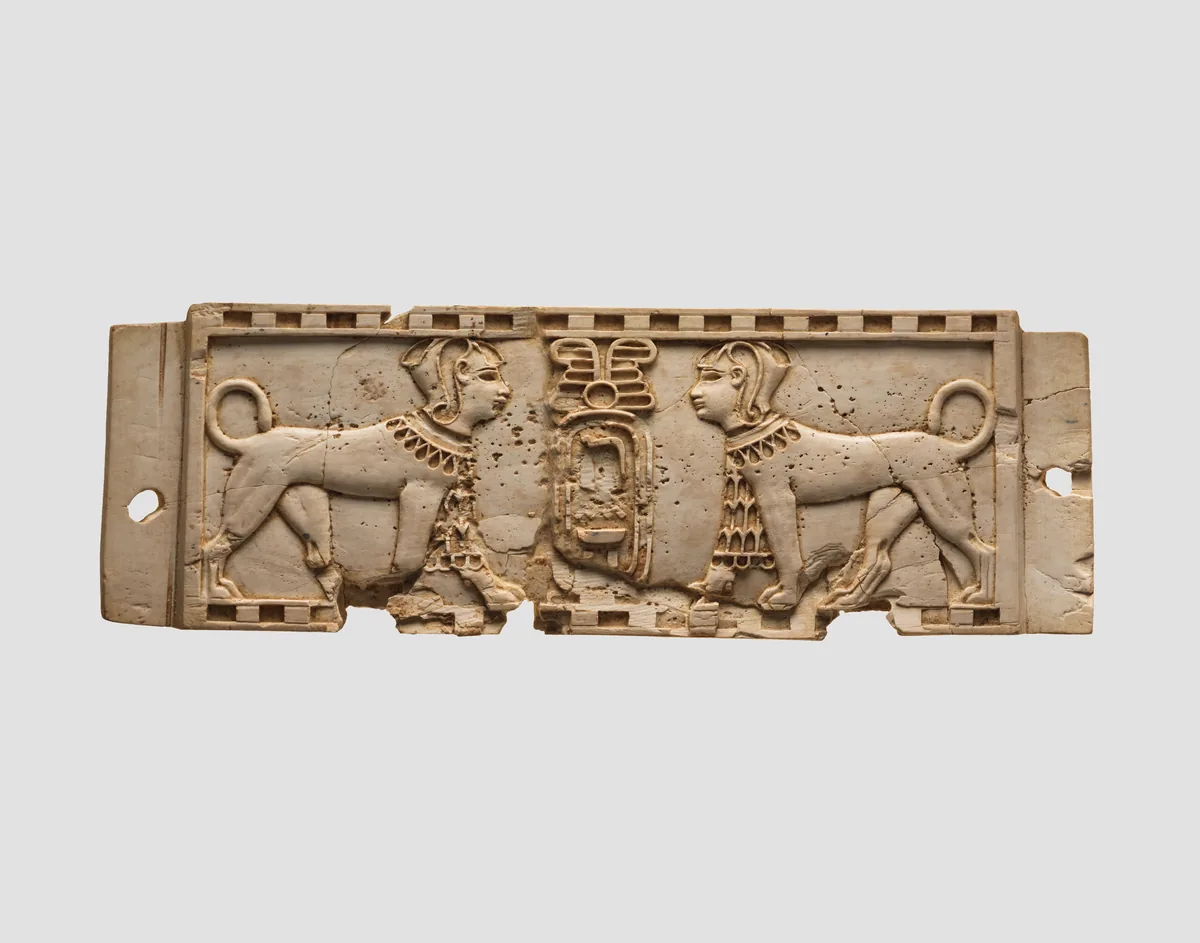
Source

Sources and further reading

The research and references behind this page. Rights to external content remain with their owners.

  1. 1 Mesopotamia, 1000 B.C.-1 A.D. (Heilbrunn Timeline of Art History, Chronology)

    The Metropolitan Museum of Art · Checked

  2. 2 Ashur (Qal'at Sherqat) - UNESCO World Heritage Centre

    UNESCO World Heritage Centre · Checked

  3. 3 Cloisonné furniture plaque with two sphinxes flanking a cartouche, collection record 62.269.4

    The Metropolitan Museum of Art · Checked

Continue from here

Follow the next connection

Every card comes from a documented relation or an editorial link. The reason line explains the connection.

The Met's timeline separates a Neo-Babylonian kingdom, ca. 625-612 BCE, from the Neo-Babylonian empire, 612-539 BCE, and UNESCO counts Babylon as capital from 626. The start is therefore double, 626/612, and it overlaps the end of Assyria.

626/612-539 BCE

The period that followed.

Reading, accessibility & privacy tools

Adjust the reading experience to suit you. These tools complement your browser and device accessibility settings. Changes apply to this page; they are kept for another visit only if you allowed that in the privacy dialog.