Discover through a particular object
Documented objects
A particular object, not a kind: every page here starts from a collection record, quotes its dating as worded, and separates what the record says from what can be inferred from it.
A kind of find describes a group: pottery, inscriptions, coins. An object is one item with a record number, a holder and a date as published by its source. Object pages keep three things apart: what you see, what the record says, and where the object is now. A field the source did not give stays empty.
Explore this section
Explore by region, period and type
Filters combine, and the address keeps the selection: refresh it, share it, come back to it.
FiltersThe Neo-Assyrian period · one object
one object
One object matches the selection; here it is in full.
The photograph could not be loaded
Object · ca. 9th-8th century BCE
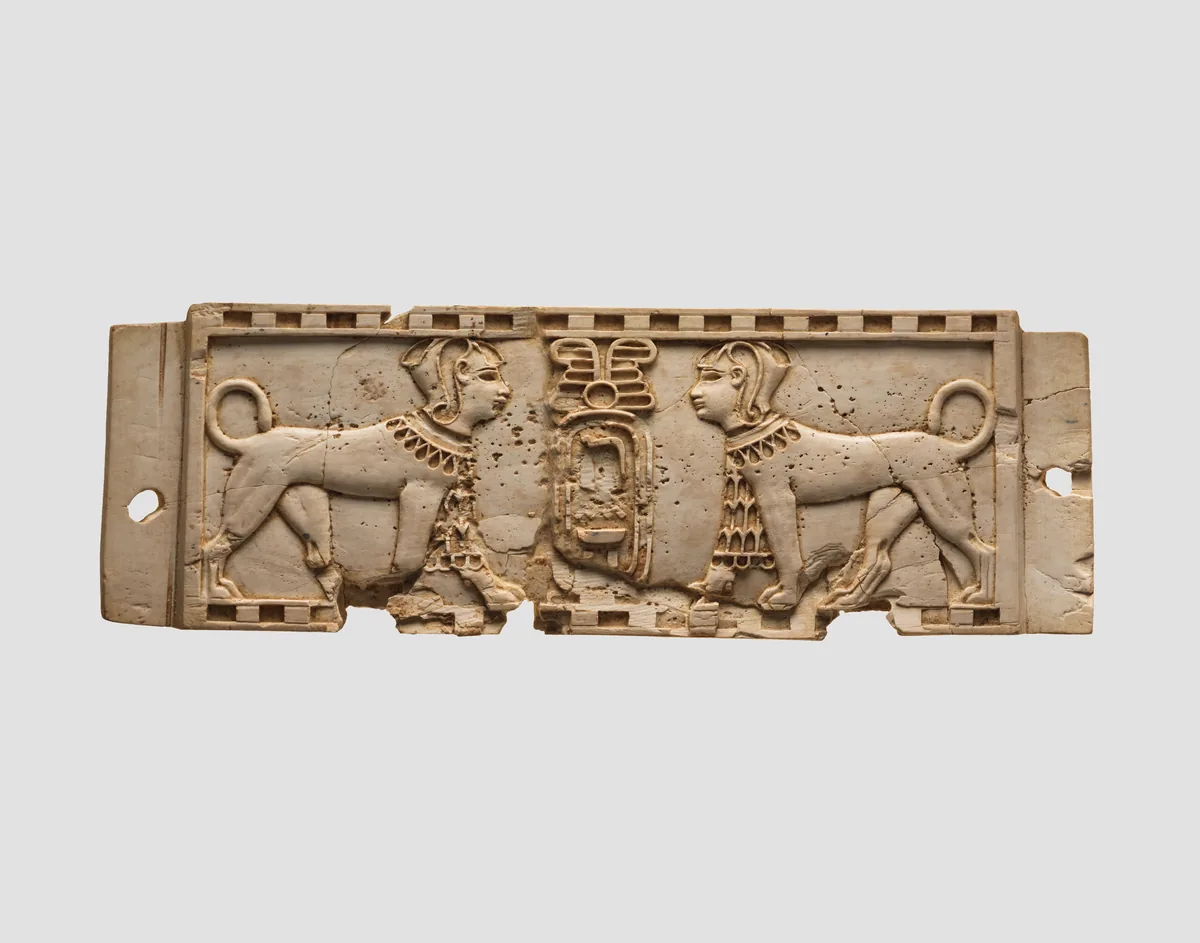
Ivory plaque from Nimrud with two sphinxes
An ivory furniture plaque excavated in 1962 at Fort Shalmaneser, Nimrud: two sphinxes flanking a cartouche. The record attributes the style to the Phoenician and notes that none of the inlays survived.
- Region
- Mesopotamia
- Material
- Ivory
- Held by
- The Metropolitan Museum of Art, New York