Architecture · Mesopotamia · 3 min read, approximately
Kalhu (Nimrud): the palace of Ashurnasirpal II
According to the Met's timeline, in 879 BCE Ashurnasirpal II moved the capital from Ashur to Nimrud, ancient Kalhu, and decorated his palace with lamassu and alabaster reliefs. How a new capital presents its king, on the evidence of one source.
The explanations distinguish finds, interpretations and open questions. Sources appear at the end of the page.
What the source says
On the Met's timeline page for Mesopotamia, 1000 BCE-1 CE, the event of 879 BCE says that Ashurnasirpal II, who according to the page reigned 883-859 BCE, moved the capital from Ashur to Nimrud, ancient Kalhu. Lamassu, colossal stone reliefs of human-headed winged lions and bulls, protected the palace entrances. The interior walls were decorated with enormous alabaster slabs carved in low relief with painted details, which showed the king hunting, engaged in ritual activities and defeating his enemies, and a cuneiform inscription incised across them gave the king's titles and enumerated his achievements. Source 1.
How the palace presents the king
According to this description, the palace presents the king in several ways at once: protective figures guard the entrances, the reliefs show him hunting, in ritual and in battle, and the inscription adds to the images a text listing his titles and deeds. The source does not say who saw the reliefs, in which rooms they were or how they were regarded in their time, so it tells us nothing about the viewers. What it does show is that image and writing worked together, on the same walls. Source 1.
A party, and what accumulated after it
When the construction of the palace was complete, according to the page, Ashurnasirpal threw a weeklong party and invited nearly 70,000 guests. Over the following centuries, it says, vast quantities of luxurious goods accumulated in the palace. The figure of 70,000 is given here as the source gives it; the page does not say where it comes from, and it is worth remembering that it is the figure of a royal celebration, not an archaeologists' count. Source 1.
Its place on the timeline and on the site
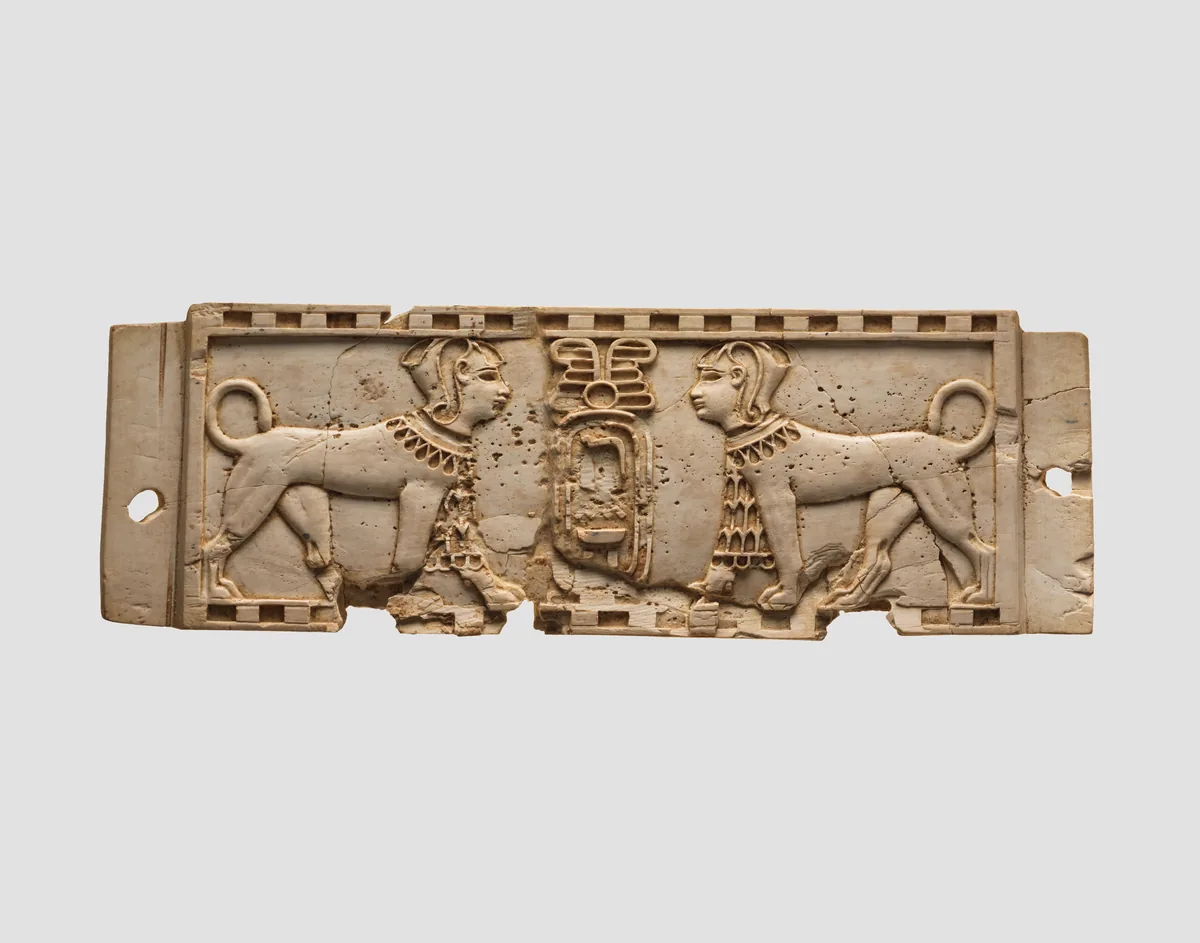
The same page dates the Neo-Assyrian empire about 911-612 BCE, and 879 BCE falls within it; the article is therefore placed in the Neo-Assyrian period. The site also has the ivory plaque from Nimrud with two sphinxes, whose museum record gives the geography "Nimrud (ancient Kalhu)" and the date ca. 9th-8th century BCE. The fields of that record read in this round name no building, so the plaque should not be tied to this palace in particular: what the two share is the city. Sources 1, 2.
Scope of reading: the Met timeline page for Mesopotamia, 1000 BCE-1 CE, was read on 24 October 2026, as were the fields of the plaque's record in the museum's collection interface. The Nimrud excavation reports and the publications of the reliefs were not read, so this page gives no plan of the palace, room names, number of slabs or wording of the inscription. The source gives the palace no name, and neither does this article.
Source
Sources and further reading
The research and references behind this page. Rights to external content remain with their owners.
- 1
Mesopotamia, 1000 B.C.-1 A.D. (Heilbrunn Timeline of Art History, Chronology)
The Metropolitan Museum of Art · Checked
- 2
Cloisonné furniture plaque with two sphinxes flanking a cartouche, collection record 62.269.4
The Metropolitan Museum of Art · Checked