RESEARCH & METHOD
Coins and hoards: date, context and economy
Why a minting date differs from a burial date, and why a hoard is not a simple snapshot of money in circulation. Museum examples and the Qula case explain the distinction.
The explanations distinguish finds, interpretations and open questions. Sources appear at the end of the page.
Start with both faces-and a question
A coin connects material, image and writing. Who issued it, how was it marked, and what happened after manufacture? These are separate questions. Identifying a coin type does not identify its last holder; a ruler's portrait is not a photograph of its users' lives. Read the metal object together with its discovery record.
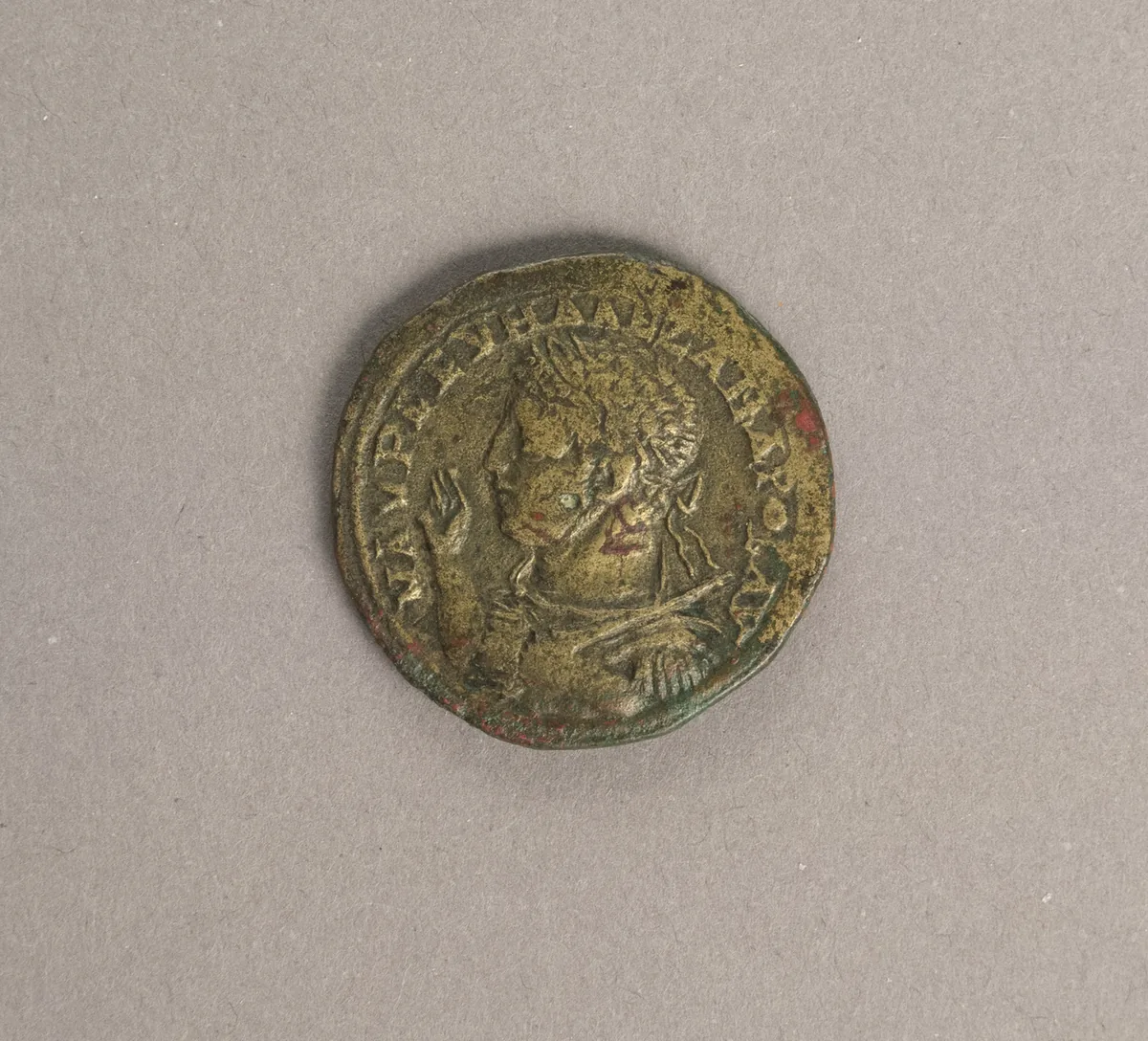
The illustrated bronze coin comes from Cyzicus in Asia Minor and is dated in its collection record to 222-235 CE. It is a comparison, not a coin from the Qula hoard. The museum identifies Alexander Severus's portrait and a legend associated with the city. Source: C14. Date and identification come from that record, not from our independent authentication of the photograph.
Three times in a coin's life
Separate manufacture, circulation and deposition. Imagine a coin minted in a particular year, passing between people and eventually entering a sealed pit. This is a conceptual example. Its minting supplies an earliest possible boundary for the fill, if the coin belongs to it; it does not reveal the duration of circulation or the moment of sealing.
The issue is not merely theoretical. A research project on Britain's late Roman hoards emphasises continued circulation after new supply ceased. This is a comparison, not a pattern to transfer automatically to every region. Source: M07. Readers should look for the argument connecting identification and contextual date rather than jumping between them.
A hoard is a selection, not necessarily a sample
A group preserved together invites questions about selection: which denominations occur, which are absent, and how new coins compare with worn ones. Before extending conclusions to a city's economy, establish whether the finds constitute one group, whether it was recovered completely and whether a container or installation was recorded.
Even a complete group need not be a random sample of market currency. Someone accumulating coins might select by material, value, availability or an unknown purpose. These are possibilities to investigate, not automatic explanations. Composition may require research into minting and distribution rather than a ready-made account of panic or war.
The Qula case and its limits
Robert Kool's study concerns an antoninianus hoard from a farmhouse near Roman Diospolis. Its abstract considers late third-century deposition and a possible relationship to monetary changes; the exact reason remains unresolved. Source: R06. We do not give a numerical total or replacement catalogue: the full paper and supplement were inaccessible, and accessible summaries differ in detail.
The case supports a question, not a finished plot. What evidence could distinguish saving, withdrawal from circulation or concealment during danger? Composition needs connection to the building context and dated comparisons. Without that connection, choosing a dramatic explanation adds no information to the coins.
Write a testable conclusion
Separate four statements: identification, find context, chronological constraint and interpretation of deposition. Knowing only the first two does not require inventing the others. Compare the gold daric on the Persian period page to see why different materials and forms need separate records; two photographs do not establish a monetary exchange ratio.
A coin without context may still inform manufacture and imagery while leaving use and burial questions unanswered. The aim is not to give every coin an individual biography but to draw only the conclusions that its documentation can support.
Source
Sources and further reading
The research and references behind this page. Rights to external content remain with their owners.
- C14
Bronze coin of Cyzicus, collection record 08.170.259
The Metropolitan Museum of Art
- C15
Daric with king, collection record 52.127.1
The Metropolitan Museum of Art
- M07
Britain’s last Roman hoards
British Museum
- R06
A Hoard of Antoniniani from Qula
Robert Kool · 2016
Research record in this library
Follow the next connection
METHOD GUIDE · TIME & CONTEXT
How are archaeological finds dated?
A date connects a question, a sample and a method. A guide to reading ranges, comparisons and the strength of a chronological claim.
3 min read, approximatelyRead the article
RESEARCH & METHOD
Reading layers: how an archaeological sequence is built
Floors, pits, fills and walls are evidence of actions. A worked example shows how their relationships form a sequence-and why a sequence is not yet a calendar.
3 min read, approximatelyRead the article