PERIOD GUIDE · The Aegean

The Neolithic in the Aegean: from Sesklo to Dimini

The Met's timeline dates the Neolithic cultures of Greece ca. 7000-3200 B.C. The two sites on this page, Sesklo and Dimini in Thessaly, give the period its dated examples, and the sources disagree on when, and why, Dimini was enclosed by walls.

Approximately 7000-3200 BCE

Move through the periods

Its place in the The Aegean scheme

The whole scheme with this period marked; the periods before and after are its neighbours in the row. Boundaries follow the sources and are not to scale.

All periods and subdivisions
  1. The Neolithic in the Aegean7,000-3,200 BCE
  2. The Bronze Age in the Aegean3,200-1,050 BCE
  3. The Early Iron Age and Geometric period in the Aegean1,050-700 BCE
  4. The Archaic period in the Aegean700-480 BCE
  5. The Classical period in the Aegean480-323 BCE
  6. The Hellenistic period in the Aegean323-31 BCE
  7. Roman rule in Greece146 BCE - 330 CE
  8. Byzantine Greece and the Aegean330-1,204 CE
  9. Latin rule and the late Byzantine Aegean1,204-1,453 CE

The frame

The Met's Heilbrunn Timeline for southern Europe, 8000-2000 B.C., gives "Neolithic cultures, ca. 7000-3200 B.C." in its sequence for Greece, between "Mesolithic cultures, ca. 8300-7000 B.C." and "Early Bronze Age, ca. 3200-2000 B.C.". Its first entry for the period, under ca. 7000 B.C., lists emmer and einkorn wheat, barley, sheep, goats and pigs, and says that they suggest "a food-producing economy is adopted in Greece and the Aegean". This page covers mainland Greece and Crete. The site follows the Met's timeline for the whole Aegean so that the region's pages share one sequence of rounded dates; the subregional names used by specialists begin with the Bronze Age pages. Source 1.

Boundaries and overlaps

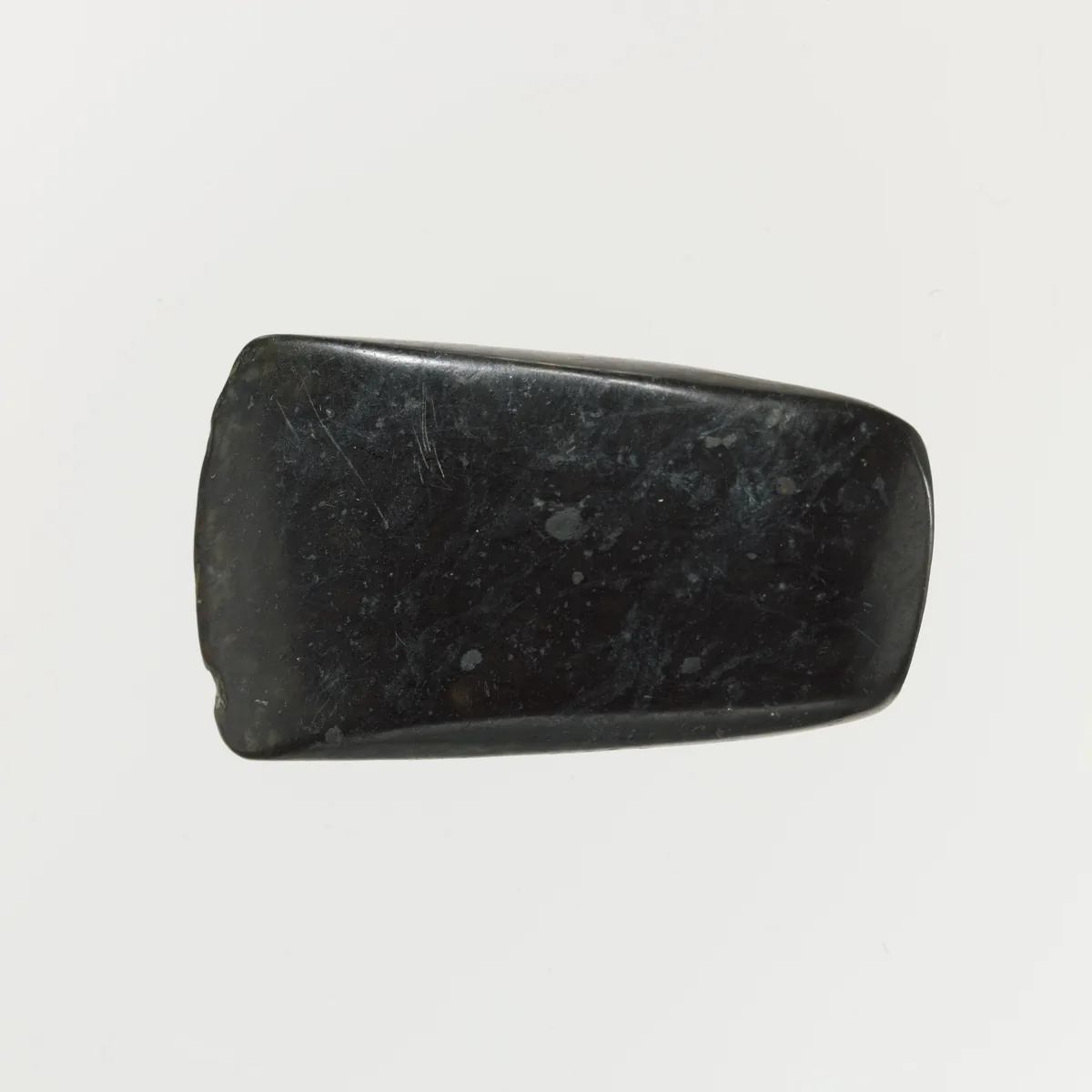
The end of the row, ca. 3200 B.C., is a rounded boundary, not an event. The same page dates metallurgical remains from sites on mainland Greece to ca. 5300-3200 B.C., so metalworking already appears inside the Neolithic row. At Dimini the sources date different things: the Greek Ministry of Culture and Sports dates the earliest settlement to "the Late Neolithic period (end of the fifth millennium BC)", while the Met's timeline places "the earliest evidence of fortifications in Greece" there at ca. 3400 B.C.; the ministry's page gives no date for the six stone enclosures and does not call them fortifications. Museum dates can also run past the boundary: the record of the axe from Crete on this site reads "5th-4th millennium BCE; Neolithic", a range that continues after 3200 BCE; the axe is placed here by its period name, and the range is not trimmed. Sources 1, 2, 3.

On this site

Three pages are placed here. The article "Sesklo: early farming and a megaron house" reads the timeline's entries on early food production and on the first "Megaron house" (ca. 5700-5300 B.C.). The article "Dimini: six stone enclosures and two dates" sets the ministry's description of the enclosures against the timeline's date for fortifications. The object page "Small serpentinite axe from Crete" adds a polished stone tool from a museum collection, with no findspot. Not yet covered: a Neolithic site on Crete or in the islands with dated phases of its own; both site articles concern Thessaly.

Source

Sources and further reading

The research and references behind this page. Rights to external content remain with their owners.

  1. 1 Southern Europe, 8000-2000 B.C. (Heilbrunn Timeline of Art History, chronology)

    The Metropolitan Museum of Art · Checked

  2. 2 Dimini (Odysseus portal, Ministry of Culture and Sports)

    Ministry of Culture and Sports (Greece) · Checked

  3. 3 Small serpentinite axe, collection record 26.31.504

    The Metropolitan Museum of Art · Checked

Continue from here

Follow the next connection

Every card comes from a documented relation or an editorial link. The reason line explains the connection.

A display group for navigation, not a new historical division: the Met's timeline divides the Aegean Bronze Age into Early (ca. 3200-2000 B.C.), Middle (ca. 2000-1600 B.C.) and Late (ca. 1600-1050 B.C.); the mainland, the Cyclades and Crete keep their own phase names.

Approximately 3200-1050 BCE

The period that followed.

Reading, accessibility & privacy tools

Adjust the reading experience to suit you. These tools complement your browser and device accessibility settings. Changes apply to this page; they are kept for another visit only if you allowed that in the privacy dialog.