Case study · Mesopotamia · 3 min read, approximately
Uruk: mass production, record keeping and decorated buildings
The Met's timeline describes several changes at Uruk and in the culture named after it: mass-produced pottery, cone mosaics on buildings, and a gradual shift from tokens to cuneiform writing. Why they are better read as separate changes than as one "invention".
The explanations distinguish finds, interpretations and open questions. Sources appear at the end of the page.
What the source says
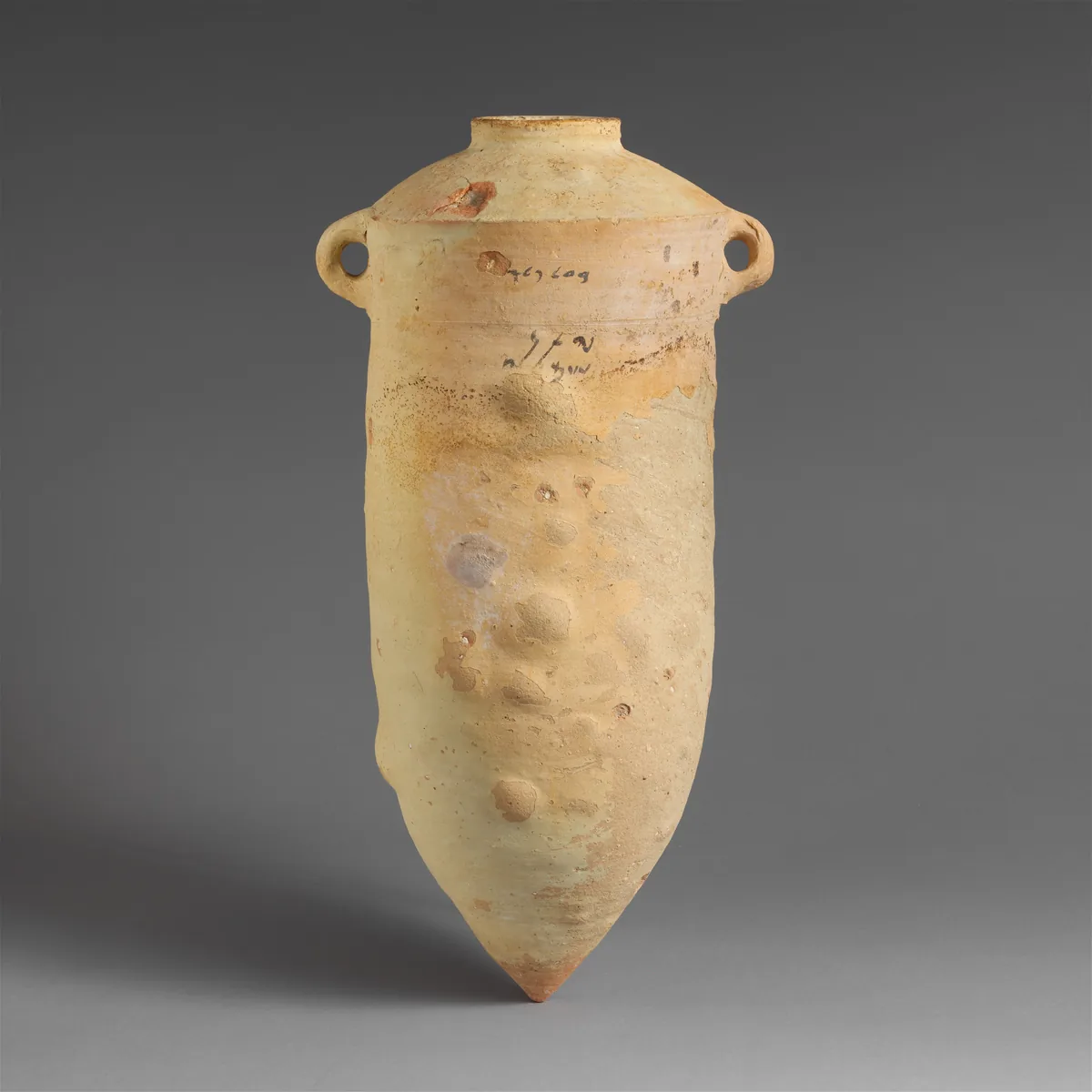
The Met's timeline for Mesopotamia describes two stages. Under about 4000-3500 BCE it says that smaller Ubaid villages gradually gave way to fewer but larger settlements in the south, and that from this emerged the Uruk culture, "marked by mass-produced pottery made on a fast wheel or in a mold." Under about 3500-3000 BCE it says that at Uruk, which it calls the largest city, walls and massive columns of some buildings were decorated with mosaics of coloured stone or clay cones embedded in plaster. Source 1.
From tokens to writing
The same section says that variously shaped clay tokens used for record keeping "slowly disappear" with the development of cuneiform writing, which uses a reed stylus to incise and later impress signs on clay tablets. It adds that stamp seals were largely replaced by cylinder seals, which allowed a wider repertoire of designs and motifs. The source links these changes to an increasingly centralized economy and stratified society that generated new administrative practices; this is the source's interpretation, and the site gives it as such. Source 1.
Several changes, not one invention
The source does not describe a single moment when something was "invented". Mass-produced pottery is dated to the stage of 4000-3500 BCE, the mosaics, writing and cylinder seals to the stage of 3500-3000 BCE, and the tokens disappear "slowly". Only the mosaics are described as a find in the city of Uruk itself; the pottery, the writing and the seals are described as features of the region or the culture. Anyone joining them into one story should remember that they rest on different dates and on finds from places the page does not specify. Source 1.
Its place on the timeline
In the period list of the same page the Uruk period is dated about 4000-3100 BCE in both north and south, and the general label "Chalcolithic" about 5500-3000 BCE. In the south it is followed by the Jemdet Nasr period, about 3100-2900 BCE, which crosses 3000 BCE. Everything the article describes is dated in the source no later than 3000 BCE, so it is placed in the Chalcolithic in Mesopotamia. Source 1.
Scope of reading: the Met timeline page for Mesopotamia, 8000-2000 BCE, was read on 24 October 2026. Neither the Uruk excavation reports nor publications of particular tablets, tokens or seals were read, so the article does not deal with a single object and gives no dates from the site itself.
Source
Sources and further reading
The research and references behind this page. Rights to external content remain with their owners.
- 1
Mesopotamia, 8000-2000 B.C. (Heilbrunn Timeline of Art History, Chronology)
The Metropolitan Museum of Art · Checked