OBJECT GUIDE · POTTERY · 3 min read, approximately
Pottery: from production to use and dating
What can a rim, handle or sherd tell us? Read pottery by connecting manufacture, use and the archaeological context of its discovery.
The explanations distinguish finds, interpretations and open questions. Sources appear at the end of the page.
Begin beyond the complete vessel
A museum photograph may show a complete pot, while a research question begins with a small sherd. Separate three stories: how the vessel was made, what people did with it and how it reached its findspot. These concern different events. A name such as “jar” starts a description; it does not identify the user or the contents. A careful description, however, lets a reader compare the same feature across assemblages and formulate a question that can be tested.
Production: what evidence supports the claim?
White, Paynter and Brown’s guidance distinguishes production sites from places where pottery was used, stressing material, form, technology and context. Its examples are British, not a chronology for this region. 1. Use that distinction as a reading question: does the author present a workshop, a raw-material comparison or a vessel description? These support different claims. State which kind of evidence the sentence relies on before expanding its implications.
For example, “local production” should lead you to the method of investigation. Does “local” mean one settlement, a broad geological area or a familiar style? A short explanation need not invalidate a conclusion, but it should not be made more expansive than the published claim. Descriptive tables and section drawings are useful working documents: they show whether two vessels resemble each other in the features actually used for comparison.
Two examples with different contexts
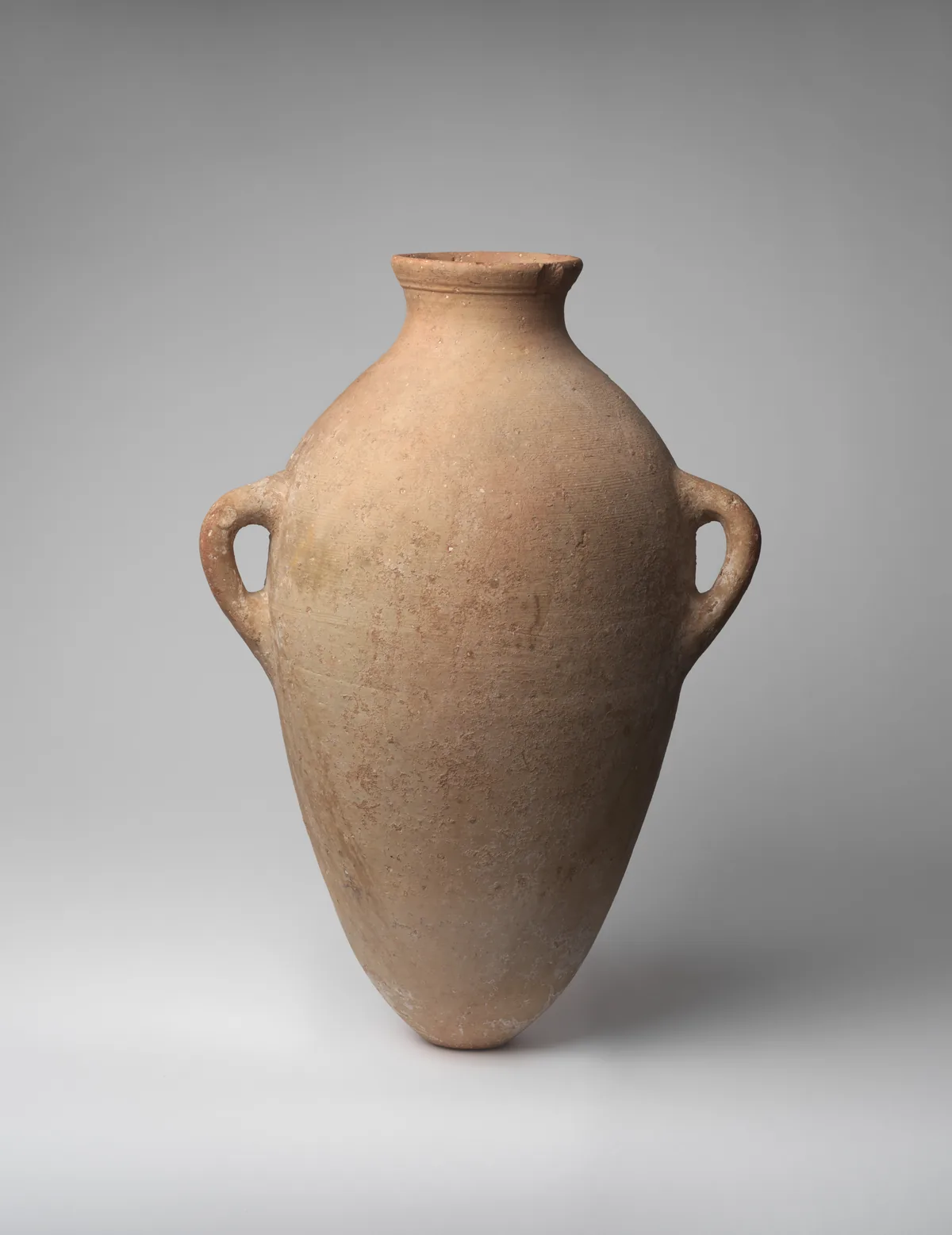
The catalogue assigns the painted jug to Cyprus, approximately 1900-1800 BCE, and the jar below to the Levant, approximately 1500-1400 BCE. 3, 2. These are collection records, not finds from one excavation. Start by identifying each item and the limits of its record. Differences in shape, decoration or date do not alone establish a trading route; similarities do not document a journey either.
Use: ask without inventing an answer
Write down the intended question first: transport, storage, serving or another activity. Then look for the published observations about contents, surface traces and the place where the pot lay. This article does not identify the contents of the illustrated objects. Its purpose is to prevent appearance from becoming an unsupported account of daily life. Where a record provides no contents, possibilities can remain questions; they should not become factual captions.
Dating a vessel and dating a layer
Imagine a teaching example rather than a real excavation: a sherd made in an earlier phase appears in a later fill. The two dates need not conflict. One may concern manufacture and the other the event that deposited the fill. Ask what else came from the context, whether it was sealed and how the author established the sequence. “How old is this pot?” then becomes more precise: which event is being dated, using which evidence?
Also distinguish a date for a type from one for an individual object. A range assigned to a group is not an individual year of manufacture. It may contribute to an assemblage argument, but the connection to the layer needs an explanation. Words such as “approximately”, “attributed” and “possible” carry information. Removing them to make a story more confident changes the claim.
A worksheet for reading pottery
- Identity: which object, sherd or assemblage, and which catalogue number?
- Description: which features were compared-fabric, rim, base, handle, decoration or section?
- Production: what supports a workshop or raw-material source?
- Use: what was actually examined, and what remains a suggestion?
- Time: does the date concern making, using, discarding or deposition?
Finish with a sentence that separates observation and explanation: “The report describes … and interprets it as … because …”. A missing part becomes a question for further reading. The guides to layers and dating then help place one object in a wider sequence without losing its context.
Source
Sources and further reading
The research and references behind this page. Rights to external content remain with their owners.
- 1
Archaeological and Historic Pottery Production Sites: Guidelines for Best Practice
Harriet White, Sarah Paynter, Duncan Brown · 2015 · Checked
- 2
Canaanite jar, Late Bronze Age, 2001.761.9
The Metropolitan Museum of Art · Checked
- 3
Terracotta jug, Middle Cypriot I, 74.51.1316
The Metropolitan Museum of Art · Checked